


UI/UX design cost for a startup in 2026: agency, freelancer and in-house compared, what changes the price and how to spend less without hurting the product.
Key takeaways:
- A startup MVP usually costs $5,000–20,000 at an agency in 2026. Most UX/UI projects reviewed on Clutch cost $10,000–49,999.
- Agency rates run from $25–49 an hour in India and Mexico to $100–149 in the United States, so $10,000 buys anywhere from 67 to 400 hours.
- User roles, platforms, design system size, motion, front-end code and research depth change the price more than screen count does.
- You can spend less by starting with one platform and one role, testing flows in a prototype and splitting the work into stages.
UI/UX design for a startup MVP usually costs $5,000–20,000 at an agency, according to Dribbble's 2026 pricing guide, and most UX/UI projects reviewed on Clutch fall between $10,000 and $49,999. At Cosmos Studio, fixed-scope projects start from $5,000 and hourly rates start from $50. The final price depends mostly on user roles, platforms and how much research you still need.
I'm Illia Kulbachnyi, CEO of Cosmos Studio. Below are published market prices, what your budget buys in hours, what changes the price and where you can spend less. All figures were checked on November 4, 2026. Most come from sites that sell or list design services, so treat them as list prices.
How much does UI/UX design cost in 2026?
A focused MVP sits at the low end of the market. Each added platform or stage of growth moves the project up a band.
| What you are buying | Market price | Source |
|---|---|---|
| Startup MVP | $5,000–20,000 | Dribbble |
| Web product | $10,000–40,000 | Dribbble |
| SaaS product | $12,000–45,000 | Dribbble |
| Mobile product | $25,000–60,000 | Dribbble |
| Growth-stage project | $30,000–80,000 | Dribbble |
| Web and mobile together | $70,000–150,000+ | Dribbble |
| Agency retainer | $10,000–30,000+ a month | Dribbble |
| Most UX/UI projects reviewed on Clutch | $10,000–49,999 | Clutch |
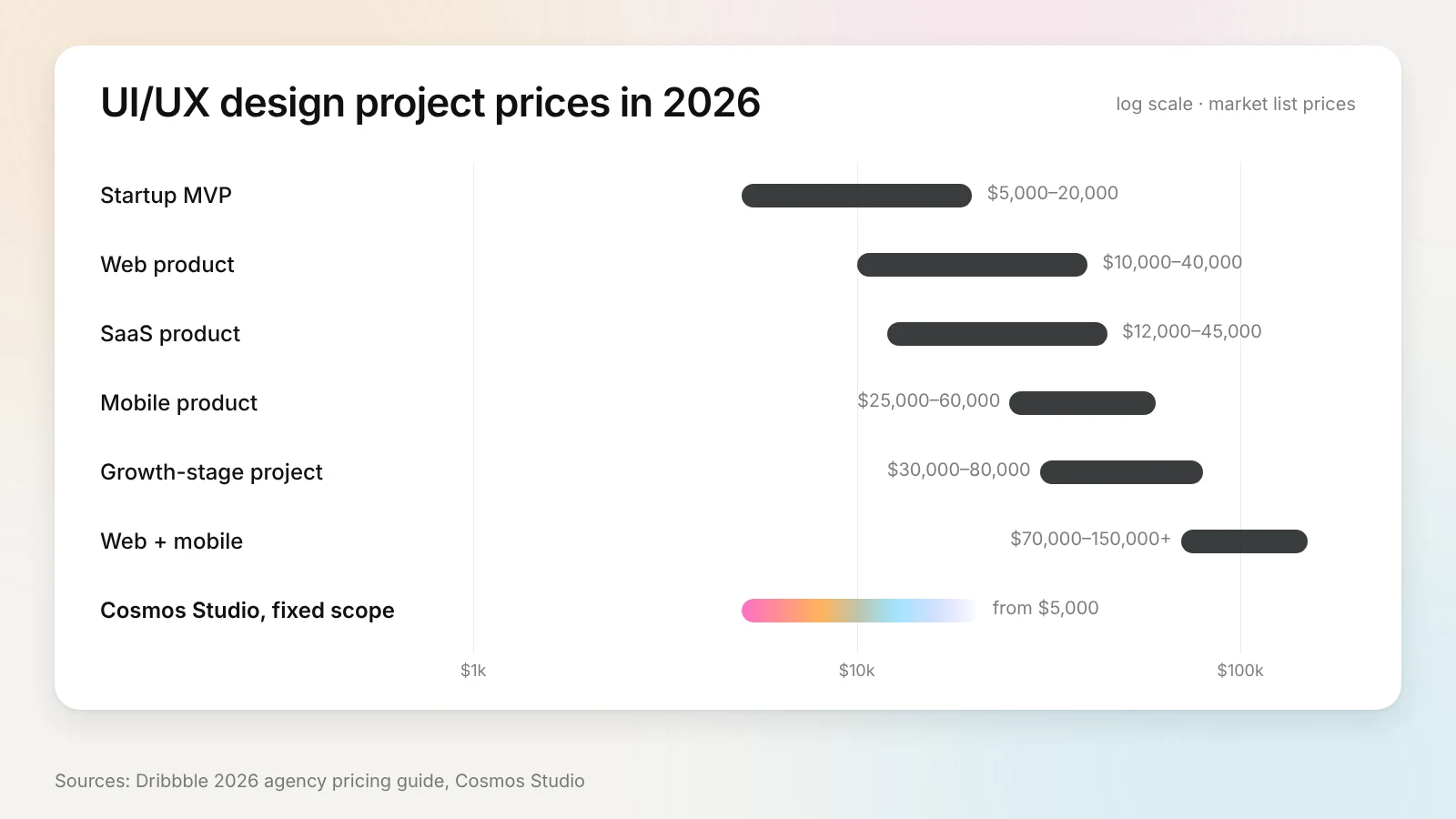
You may also see a much larger number. Clutch reports an average UX project cost of $84,973, with a typical timeline of 10 months and about $8,895 a month. That average covers long contracts, so don't use it to budget an MVP. The same page says projects typically cost $10,000–49,999.
What does your budget buy in hours?
Agency rates depend heavily on the country. Clutch lists average rates of $100–149 an hour in the United States, Canada and Australia, $50–99 in the United Kingdom, Poland and Spain, and $25–49 in India, the Philippines and Mexico. Divide a $10,000 budget by those rates and you get anywhere from 67 to 400 hours.
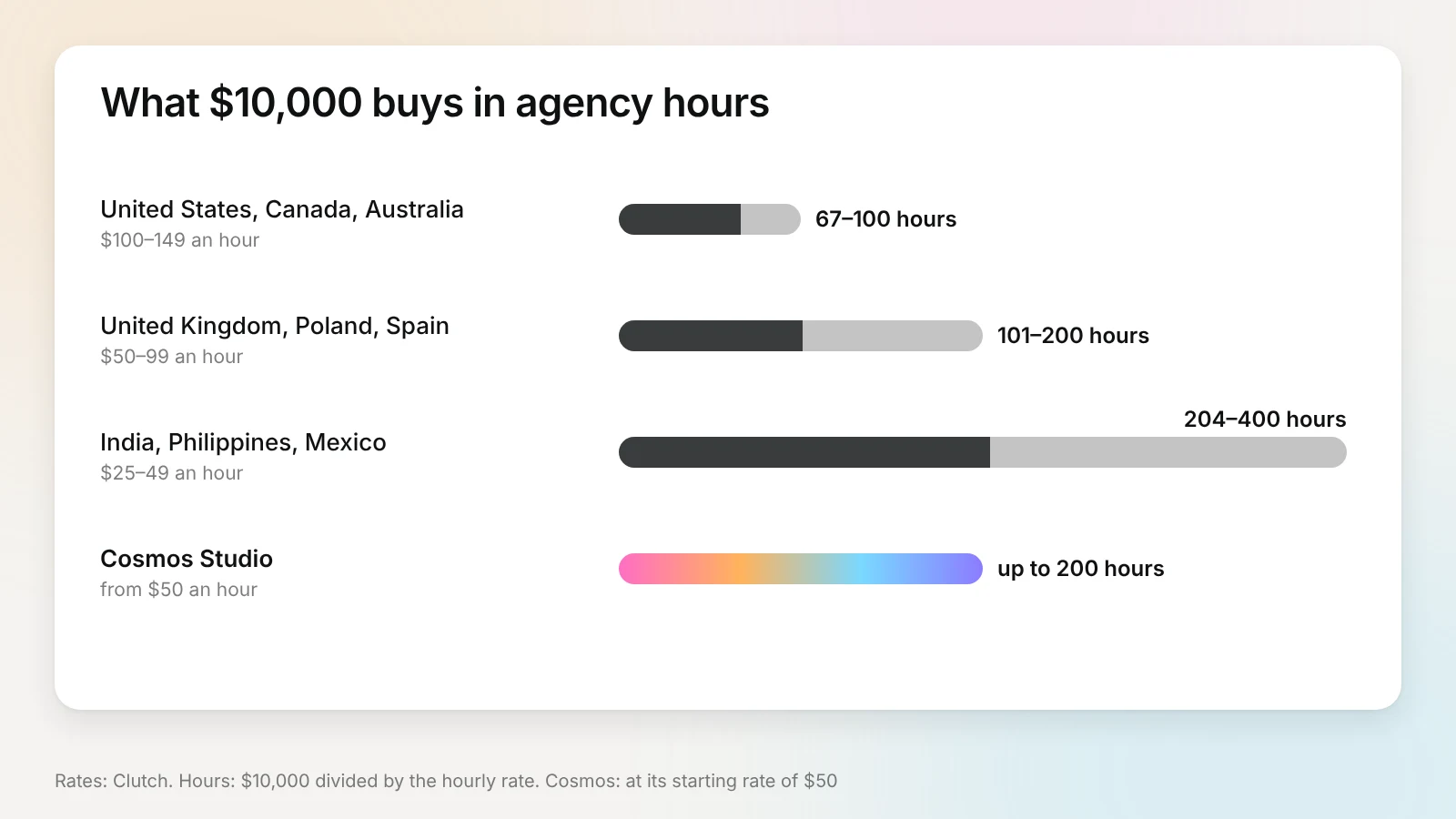
Hours are only half of the math. A senior designer who needs 40 hours for a flow can cost less than a junior who needs 100 and still gets it wrong. Ask each agency who will do the work and how many hours they plan for your key flows, then compare those numbers.
Agency, freelancer or in-house: what costs less?
A freelancer usually has the lowest rate, and an in-house designer has the highest fixed cost. A senior at $157,000 a year is about $13,000 a month before taxes and benefits, whether or not there is design work that month. The right choice depends on how much work you have and how many skills it needs.
| Option | What it costs | When it fits | The catch |
|---|---|---|---|
| Freelancer | Mid-level $50–110 an hour, senior $75–150, depending on complexity (Twine, September 2025) | One clear task: a landing page, a set of screens, a logo | You coordinate the work, and one person rarely covers research, UI, a design system and code |
| In-house designer | Median total pay in the US: $91,000 at 1–3 years of experience, $157,000 for a senior (Glassdoor via Coursera, July 2026), plus taxes and benefits | Design is weekly work for the next year or more | Months to hire and onboard, and you pay for quiet weeks too |
| Agency or studio | Project from about $5,000, or an hourly rate that depends on the country (see above) | You need several skills for a defined stage, with a deadline | Higher cost per hour than a junior freelancer, and quality varies widely between agencies |
What changes the price of UI/UX design?
Screen count is a poor unit of price. We scope a project by six things, and the first one matters most.
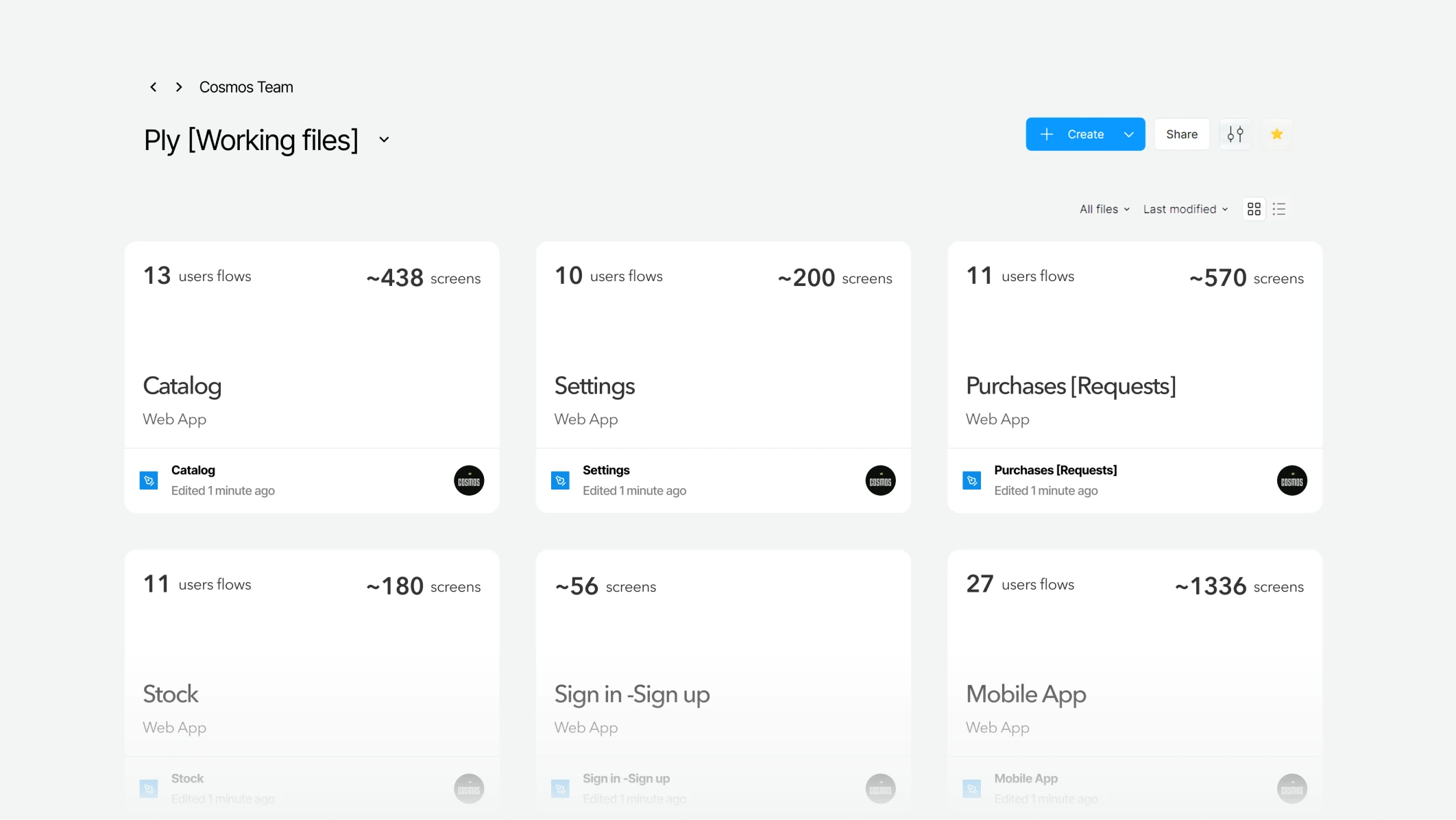
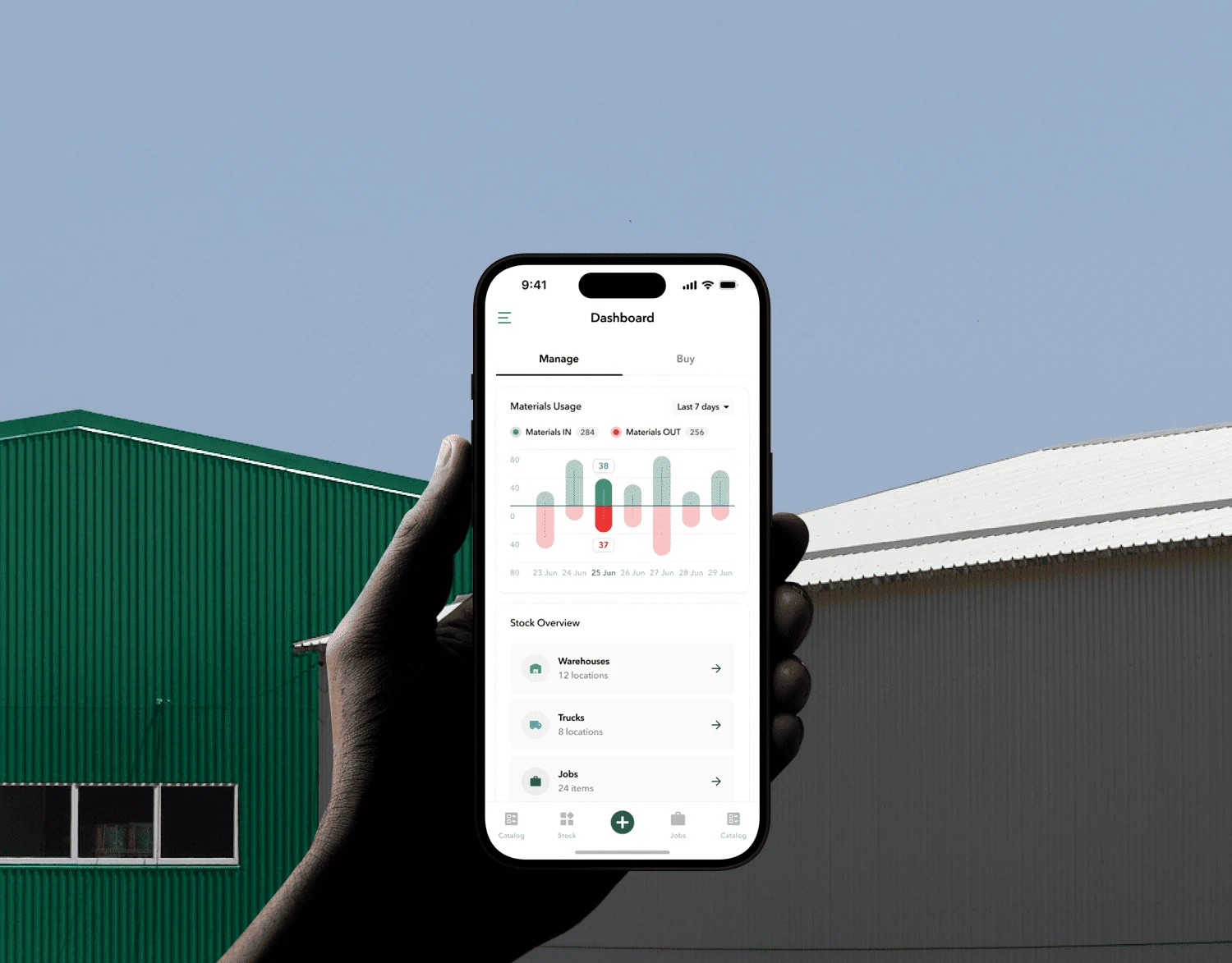
User roles and flows. Each extra role adds flows to research and design. In Ply, a procurement SaaS for mechanical contractors, field teams and warehouses work with catalog, purchasing and stock modules, and each module has its own set of user flows.
{{case}}
Platforms. Web, iOS, Android and desktop each need their own layouts. In Dribbble's guide, a web product costs $10,000–40,000 and a product on several platforms starts at $70,000.
Design system size. A few reusable components are cheap. A full system costs more up front and pays back when the product grows. For Elevated Signals, a manufacturing SaaS, we built the design system around visual hierarchy and large data sets, because users read complex production data every day.
Motion, 3D and content. Advanced animation, 3D visuals and AI video take more time. SerenX is the far end of this scale: a site with 3D models in Three.js and WebGL scenes, built from first concept to production code. It went from kickoff on May 8, 2026, to launch on October 12.

Front-end development. You can order design only, or design plus a production front end. We build in React, Next.js, TypeScript, Webflow and WordPress. Backend, mobile and cloud work goes to vetted senior engineering partners under the same contract.
Research depth. If you already know your customers, the project costs less. If you start from scratch, it adds customer interviews. Dribbble prices research at an extra $2,000–5,000. We either run the interviews or give you the questions to ask, based on The Mom Test.
What Cosmos Studio charges
We publish starting prices and no fixed list, because two products with the same number of screens can differ a lot in roles, flows and platforms. After a discovery call you get a free, non-binding estimate, and no work starts before you agree to it.
| What you need | Starts from | Typical time |
|---|---|---|
| UX audit | $2,000 | 1–2 weeks |
| Audit of an AI-built MVP (Lovable, Bolt, Cursor) | $2,000 | 1–2 weeks |
| Pitch deck | $1,000 | Depends on scope |
| Brand identity | $3,450 essential, $5,700 for print and digital, $6,850 full system | 1–3 weeks |
| Landing page with development, launch and basic SEO | $5,000 | 1–2 weeks |
| Multi-page website with CMS | $5,000 | 2–4 weeks |
| MVP app design | $5,000 | 3–4 weeks |
| Hourly work or a dedicated team | $50 an hour; specialized senior roles, such as AWS architects, up to $170 | As long as you need it |
Our projects are a poor fit below $5,000, unless you need an audit, a pitch deck or an essential brand identity. For a budget under that, a freelancer or a template is the honest choice. You can get a rough range in about two minutes with the calculator on our pricing page.
How much does it cost to design an AI product?
AI products don't need a special budget category. Loamly, an AI-native CRM, needed what a good SaaS needs: product logic, a design system and fast access to key data, so that complex processes feel simple.
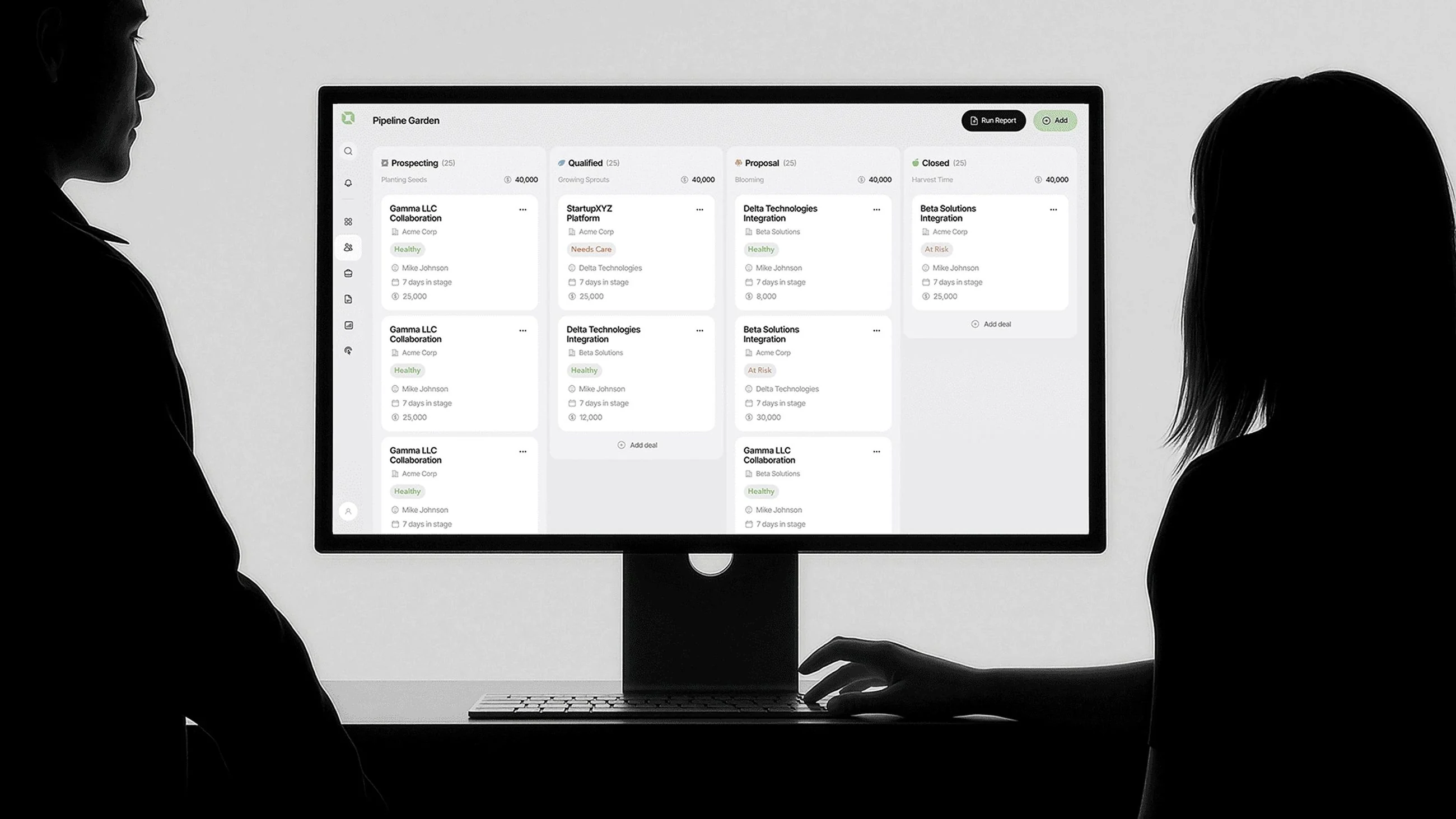
Illia's take: A typical budget for an AI product is $10,000–20,000 to design it properly and build it. The design process is very similar to SaaS. SaaS is just a monetization model, and a product is a product.
Which costs do founders forget?
The design invoice is rarely the whole bill. Dribbble lists these extras: assets $1,000–3,000, developer handoff support $3,000–7,000, WCAG accessibility work $5,000–20,000 or more, and a post-launch maintenance retainer of $2,000–5,000 a month.
A gap I see often is architecture. Founders don't think about the architecture of the future product. At Cosmos, we first make a prototype in code, with finished design and a front end, to show the product. Then experienced architects and backend developers join to build the architecture and servers so the product works and can scale. Founders who vibe-code on their own often don't know this step exists. We wrote a separate guide on how to fix a vibe-coded MVP.
How to spend less without hurting the product
- Start with one platform and one user role, and add the rest after you see real usage.
- Test key flows in an interactive prototype before the final UI. We did this for Fastmates, an iOS and Android fasting app.
- Bring what you already know: support tickets, analytics, sales call notes, past research.
- Split the work into stages with a separate estimate for each, so you can stop or change direction.
- Keep motion and 3D for the marketing site and the moments that sell. Leave them out of daily work screens.
- If the product already exists, start with an audit. Our guide to UX audit cost explains what you get.

What can you get for your budget?
- Under $5,000: a UX audit, a pitch deck, an essential brand identity, or a freelancer for a small set of screens.
- $5,000–20,000: a landing page or website, or an MVP on one platform with few roles.
- $20,000–60,000: a SaaS or mobile product with several roles and a fuller design system.
- $70,000 and more: several platforms, or a long engagement with a dedicated team.
Not sure where you fit? Send us your product link, your stage and the metric you want to move. We'll reply with next steps and, after a short call, a free estimate.
{{contact}}
FAQ
How much does UI/UX design cost for a startup?
A startup MVP usually costs $5,000–20,000 at an agency, according to Dribbble's 2026 guide, and a SaaS product $12,000–45,000. At Cosmos Studio, fixed-scope projects start from $5,000. The price depends on user roles, platforms, research and whether you also need front-end code.
What is the hourly rate for a UI/UX design agency?
Clutch lists average rates of $100–149 an hour in the United States, $50–99 in the United Kingdom, Poland and Spain, and $25–49 in India and Mexico. Cosmos Studio works from $50 an hour, and specialized senior roles, such as AWS architects, cost up to $170.
Is a freelancer cheaper than a design agency?
Usually, yes, per hour. A freelancer fits one clear task, such as a landing page or a few screens. An agency costs more per hour, and you get research, UI, a design system and code from one team under one contract, which matters when deadlines depend on each other.
How long does UI/UX design take?
At Cosmos Studio, a typical project takes 4–8 weeks: a landing page 1–2 weeks, a multi-page website with CMS 2–4 weeks, MVP app design 3–4 weeks and a UX audit 1–2 weeks. Larger products and redesigns are delivered in stages.
Why don't design agencies publish fixed prices?
Two products with the same number of screens can need very different work, depending on roles, flows and platforms. A fixed list would be too high for one and too low for the other. Cosmos Studio publishes starting prices and sends a free, non-binding estimate after a discovery call.
Sources



Related articles
Start your project with Cosmos™
Drop us a message, Anna reviews every brief personally and gets back to you within one business day. From there it's simple: we align on scope, sign the contract, and book your start date. Fast, clear, no back-and-forth.