Adobe opens Creative Cloud to agents, Claude Sheets, Businesses in ChatGPT – AI & Design Weekly #7


Adobe lets third-party agents edit Creative Cloud files, Claude Sheets and Whiteboards, Businesses in ChatGPT, Gemini Decisions API, Muse Ember, Helsing Clarity: November 9–12, 2026.
Key takeaways:
- Adobe will let third-party agents edit native Photoshop, Illustrator, Premiere and After Effects files via local MCP; private beta in early 2027.
- Claude adds Sheets, Whiteboards and interactive connectors; OpenAI opens Businesses in ChatGPT in beta.
- Cheap AI calls: Gemini Decisions API at $0.10 per million input tokens, Meta Muse Ember at $0.10/$0.50.
- Upwork and OpenAI: AI-related fixed-price projects carry 52% higher budgets than similar non-AI jobs.
- Helsing unveils Clarity, where an operator confirms each step and every decision is logged with their name.
Twice a week I pick the AI and design news that matter to people who build products. This issue is about where AI shows up: not in a separate chat window, but inside the tools and files teams already use – Photoshop layers, spreadsheets, a store's product feed, an operator's screen.
1. Adobe will let third-party AI agents edit Photoshop, Illustrator, Premiere and After Effects files
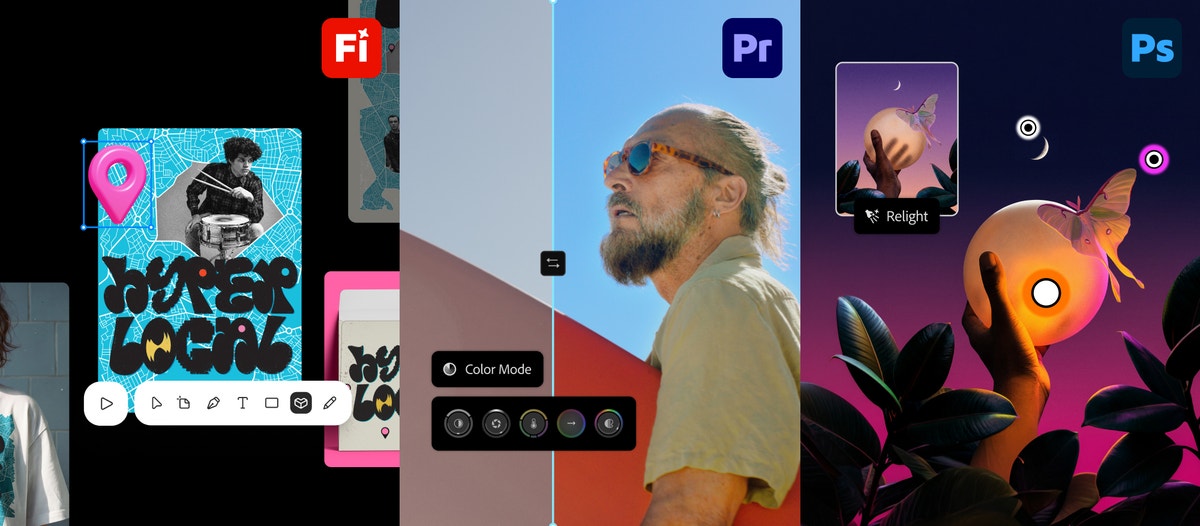
At Adobe MAX on November 10, Adobe previewed local MCP integrations for Creative Cloud. People will be able to direct their preferred third-party agents to work in Photoshop, Illustrator, Premiere and After Effects, with the agent changing native project files on the user's computer. Layers, vectors, bins and sequences stay editable. The integrations go into private beta in early 2027.
Adobe also showed Firefly Design (beta), which puts raster, vector, motion, 3D and print on one canvas, and Firefly Builder (private beta), which turns a natural-language request into an interactive, on-brand prototype of a website, presentation or app, then lets you edit it on the canvas. InDesign gets real-time co-editing in beta, so several designers can work on one layout at once.
Why it matters: the agent works on the real file, not on a flat image. A clean file – named layers, components, a written-down design system – becomes something an agent can read and change safely. A messy one gets messier faster. That is why we build files and systems to last in brand identity design.
Illia's take: Treat your design files as an interface for agents now, before the beta opens. Name layers, keep one source for colors and type, and decide which files an agent may touch. Teams that do this will get real speed from agents. Teams that do not will spend the time checking what the agent broke.
Sources: Adobe: Creative Cloud tools become agentic workflows; Adobe Blog: new ways to create across Creative Cloud and Firefly
2. Claude gets Sheets, Whiteboards and apps you can use inside the chat

On November 10 Anthropic added new artifact types to Claude. In Claude Sheets a team and Claude build spreadsheets together, with formulas and several tabs. Claude Whiteboards is a shared board for laying out ideas in a meeting and then asking Claude to sum up what the team found. Claude Data, formerly Dashboards, connects to sources such as Snowflake and Salesforce. With interactive connectors, partners can embed their apps in Claude, so people can work in Adobe, Atlassian and other tools without switching tabs. Anthropic says the Claude Marketplace lists more than 9,000 connectors and plugins.
Why it matters: the chat window is turning into a workspace where other companies' apps appear. If you build a SaaS product, part of your interface may soon live inside Claude or ChatGPT, next to a dozen competitors. Which actions are worth bringing there, and what stays in your own app? That is a product decision we help teams make in AI product design.
Source: Anthropic: Working with Claude Sheets, Whiteboards and interactive connectors
3. OpenAI opens Businesses in ChatGPT: verified profiles, product feeds and business agents

On November 10 OpenAI launched Businesses in ChatGPT in beta. Through Business Hub a company can claim its profile and, once verified, update key details and add product feeds with pricing and availability. Insights show the number of mentions, website clicks and the topics where the business's site is cited; they appear only when there are enough conversations to meet a threshold, and OpenAI does not share users' chats with businesses. Business Agents let a customer talk to the company inside ChatGPT, in a conversation that is clearly labeled and kept separate from ChatGPT's own answers. For now Business Agents are available to eligible ecommerce and online service businesses in the US; profile claiming is open to eligible businesses wherever ChatGPT is available.
Why it matters: OpenAI says 1.2 billion people use ChatGPT each week, and now a business can control how it looks there and see how often it comes up. Your product data, your site structure and the clarity of your pages now decide what an AI says about you. That is the core of our AI search optimization and GEO website design.
Illia's take: If you sell online, claim your profile as soon as you can, even outside the US. Then fix the basics on your own site: clear pages, honest prices, structured product data. The AI answer is only as good as what it can read about you.
Source: OpenAI: Introducing Businesses in ChatGPT
{{newsletter}}
4. Google launches the Gemini Decisions API for fast yes/no and scoring calls
On November 11 Google introduced the Gemini Decisions API, powered by a new model, Gemini Decision 1. Instead of writing text, it scores answer options in a single pass and returns a confidence score from 0 to 1. One request can carry text, images, audio, video or PDFs and up to 1,000 separate questions of three types: yes/no, multiple choice and a score on a rubric. Google says it answers in 150–250 ms end to end. Pricing is $0.10 per million input tokens and nothing for output, with a no-cost tier in Google AI Studio. Google already uses it in Stitch to turn rough canvas ideas into playable wireframes.
Why it matters: many AI features in a product are small judgement calls: is this message spam, which plan fits this user, is this layout on-brand. A cheap, fast answer with a confidence score lets the interface act differently when the model is sure and when it is not – for example, ask a person to check the low-confidence cases. Designing those paths is part of our AI agent UX design.
Source: Google: Gemini Decisions API
5. Meta releases Muse Ember, a small agent model at $0.10 per million input tokens
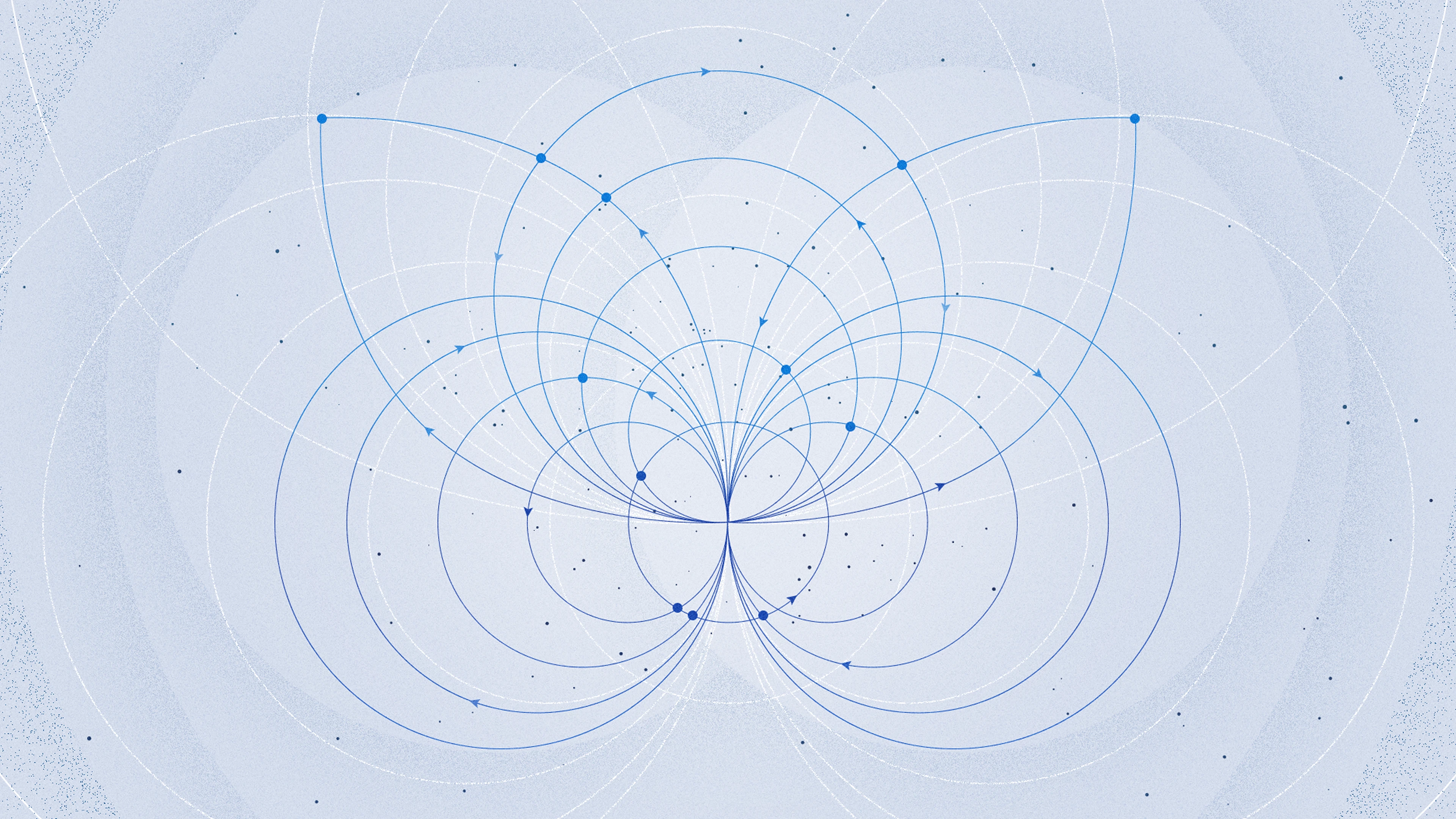
On November 9 Meta released Muse Ember, which it calls its smallest and most efficient model, built for the work agents repeat all day. It has a 1-million-token context window, up to 512K output tokens, and takes text, images, audio and video as input. The API price is $0.10 per million input tokens and $0.50 per million output tokens. Meta says that on the Artificial Analysis index Ember matches Claude Haiku 5.5's best score at about a third of the cost; on coding, Meta's own results are mixed: Ember leads on Artificial Analysis's Coding Agent Index, while Haiku scores higher on FrontierCode 2.0. Ember is available through Muse Code, the Meta Model API, Google Cloud and Oracle Cloud.
Why it matters: the price of a routine agent step keeps falling. That makes it realistic to run an agent in the background of a product – sorting requests, checking forms, preparing drafts – without a bill that kills the feature. The new question is how the user sees and controls work they did not start. We cover that in AI product design.
Source: Meta: Introducing Muse Ember
6. Upwork and OpenAI: AI-related freelance projects carry 52% higher budgets
On November 10 Upwork and OpenAI published a joint study comparing Upwork job data with ChatGPT use. In 43 of 63 work categories, activities that are common in ChatGPT lost share of Upwork postings while rarer ones gained; the other 20 categories showed the reverse, and the authors say ChatGPT use alone does not explain changes in demand. Compared with similar non-AI jobs posted in the same month, AI-related fixed-price projects had 52% higher budgets, and hourly AI-related contracts logged 41% more hours in their first 90 days. Posted hourly rates were about the same. AI-related jobs also combined tasks in new ways: 8.4% of their task pairs were historically uncommon, against 2.4% for other jobs.
Why it matters: clients are not just buying the same work cheaper. They pay more for jobs that bundle tasks in new ways – research plus prototype plus a working build. For founders this is a hint about hiring: look for people and teams who can cover the whole loop, not one step. This is how we run product UX/UI design projects. The study shows an association, not cause and effect.
Sources: OpenAI: AI's effect on freelance work; Upwork: AI is changing how freelance work comes together
7. Helsing unveils Clarity, an agentic intelligence platform with an operator in the loop

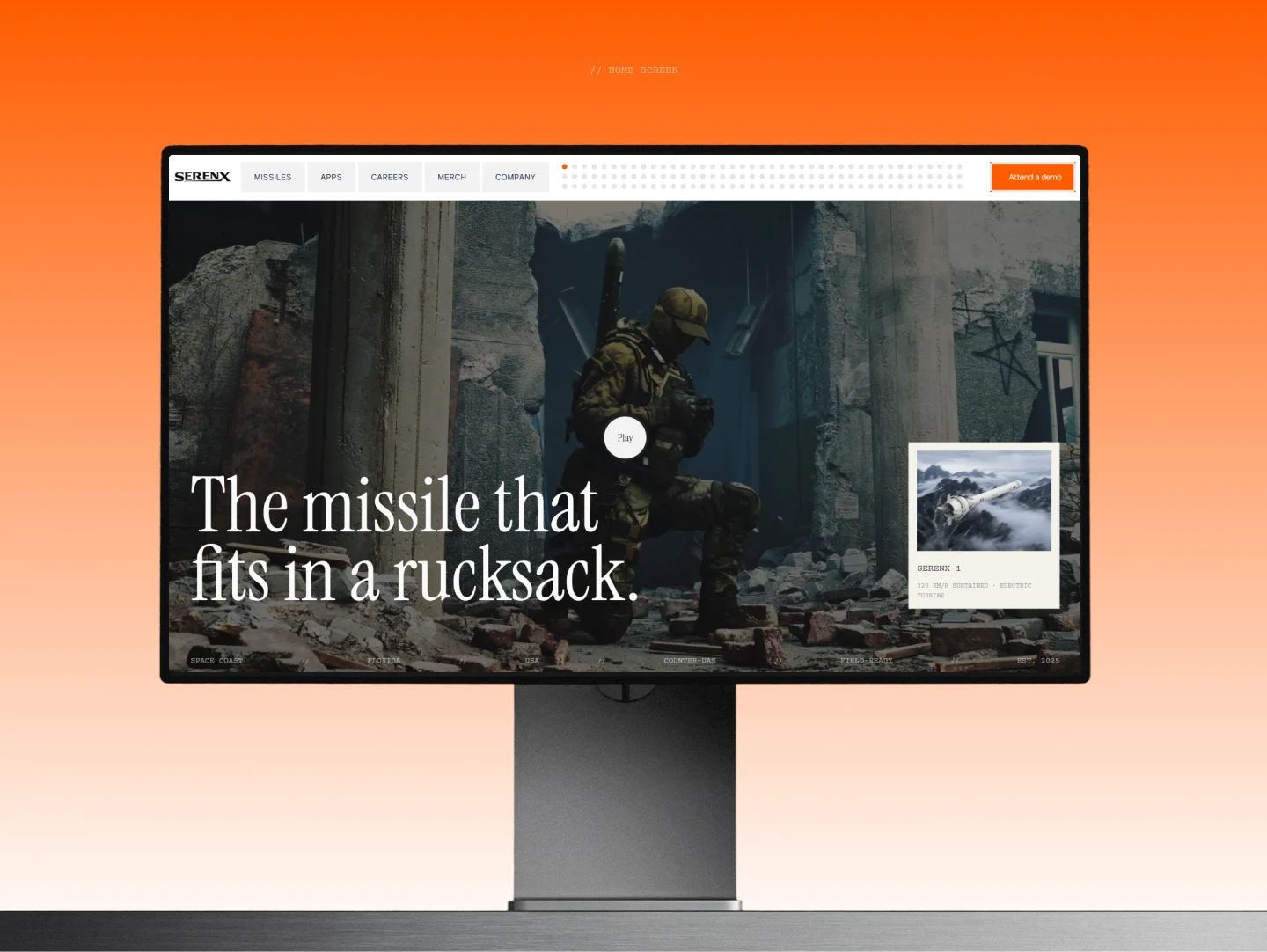
On November 11 in Berlin, Helsing unveiled Clarity, a software platform for military intelligence. Hundreds of AI agents work in parallel on sensor feeds, open sources and written reports, using a shared ontology and evidence base. The software runs on infrastructure the customer owns, follows open-architecture (MOSA) principles and implements relevant NATO standards. Helsing describes the human role in detail: an operator reviews the evidence and selects each asset, authorizes every hand-off to a weapon, a target is nominated only when independent sources agree, confidence is high and an operator confirms, and every decision is recorded with the person who made it. Helsing has not said which forces use Clarity or when it enters service.
Why it matters: "human in the loop" is now spelled out as a sequence of screens: what evidence the operator sees, what they confirm, what is logged and under whose name. When hundreds of agents feed one person, the interface decides whether that person can keep up. This is what we design in defense software UX for C2 and ISR.
Source: Helsing: Helsing unveils Clarity; image from Resilience Media
{{case}}
Also this week
- NVIDIA said on November 12 that Jensen Huang resigned as president, CEO and board member, effective immediately. CFO Colette Kress is interim CEO while the board searches for a permanent one, and Harvey C. Jones becomes the company's first chair. NVIDIA gave no reason. NVIDIA
- Google DeepMind introduced AlphaProof Code, which used AI agents and human experts to formally prove key security properties of the code behind the Signal protocol in four weeks – work it says used to take expert teams years. Google DeepMind
At Cosmos Studio we design AI products, agent flows and operator consoles for SaaS and defense-tech teams. See our work, and if you are deciding where AI should live in your product, let's talk.
{{contact}}
UX/UI design for AI products: AI assistants, AI-native SaaS and copilots. Research, interaction design and front-end code from one senior team.
FAQ
What is AI & Design Weekly?
A twice-weekly digest by Illia Kulbachnyi and the Cosmos Studio team with the AI and design news that matter to teams building SaaS, AI and defense-tech products.
How do you pick the stories?
We read 30+ design, AI and defense-tech sources and check every claim against the original source. When only a secondary source confirms a detail, we say so under the story.
What does MCP in Creative Cloud mean for designers?
MCP is a standard way for an AI agent to use another app. With Adobe's local MCP integrations, an agent you choose can change your Photoshop, Illustrator, Premiere or After Effects files directly, and the result stays editable. Clean, well-structured files will matter more. We help teams set this up in AI product design projects; book a call to discuss yours.


Related articles
Start your project with Cosmos Studio™
Drop us a message, Anna reviews every brief personally and gets back to you within one business day. From there it's simple: we align on scope, sign the contract, and book your start date. Fast, clear, no back-and-forth.
