Claude Fable 5.2, Gemini Omni video edits, Shield AI buys Echodyne – AI & Design Weekly #6


Claude Fable 5.2 at about half the cost per task, NN/g on the agent harness, Gemini Omni video edits, Adobe and Disney, Axon–Skydio, Shield AI–Echodyne: November 5–10, 2026.
Key takeaways:
- Claude Fable 5.2 nearly matches Opus 5.5 on FrontierCode 2.0 at about half the cost per task; the API costs $8/$40 per million tokens.
- NN/g names the agent harness: context, tools, permissions and limits around the model, which shapes how the agent behaves.
- Gemini Omni 1.2 Flash edits one video clip over several turns at $0.07 per second in 720p.
- Defense tech consolidates: Axon puts about $1.2B into Skydio, Shield AI buys Echodyne for $5.3B.
Twice a week I pick the AI and design news that matter to people who build products. This issue is about the layer around the model: the software that decides what an AI may do, what a task costs, and how one company's drone or radar plugs into another company's system.
1. Anthropic's Claude Fable 5.2 nearly matches Opus 5.5 on coding at about half the cost per task

Anthropic released Claude Fable 5.2 on November 9. On the FrontierCode 2.0 agentic coding benchmark, Fable 5.2 at High effort scored 45.3%, against 45.5% for Opus 5.5 at its best setting, at roughly half the cost per task. At Xhigh effort it scored 49.1%, the highest of any released model Anthropic tested. API pricing is $8 per million input tokens and $40 per million output tokens; a fast mode, up to 2.5 times faster, costs $16 and $80. The model is in the API as claude-fable-5-2 and on AWS, Google Cloud and Microsoft Azure. Anthropic also announced Mythos 5.2, which is limited to vetted users.
The chart tells more than the headline. Each model is a line of dots, one per effort level, and the cost axis is per task, not per token. The same model can be a cheap assistant or an expensive expert depending on one setting.
What it changes: if your product runs AI tasks, effort level is now a product decision. Who picks it – the user, the plan or the product? Does the person see that a deep answer costs more and takes longer? Designing that choice, and keeping the model swappable when the next release changes the price, is part of our AI product design work.
Illia's take: I would give this choice to the user. Put a simple switch next to the request – fast or deep – and say up front that deep takes longer and costs more. When people choose the trade-off themselves, a slower answer or a higher bill does not come as a surprise.
Source: Anthropic: Claude Fable 5.2 and Mythos 5.2
2. Nielsen Norman Group defines the agent harness
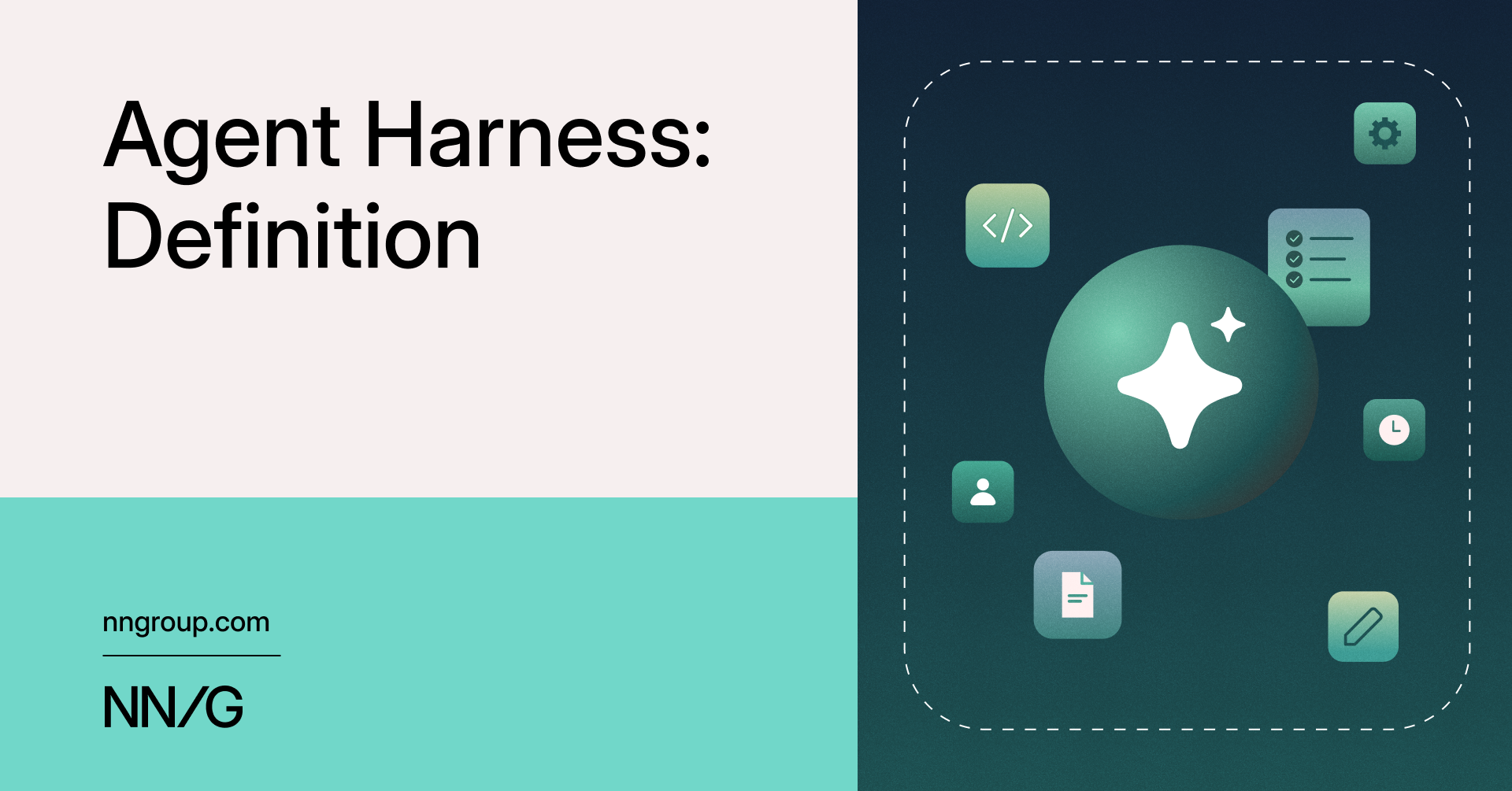
On November 6 NN/g published "Agent Harness: Definition" by Caleb Sponheim. The harness is the software around an AI model that runs its loop: it carries out the model's tool requests, returns the results, and controls what the model sees and may do. It supplies context (the user's request, developer instructions, earlier messages, saved preferences), connects tools and enforces permissions, including the moments when a person must approve an action, and sets limits on time, cost and steps.
Why it matters: two assistants on the same model can behave very differently because of the harness. That gives product teams a word for the part they own. Approvals, limits, what the agent remembers and what happens when a tool fails are design decisions, and they need the same research and testing as any screen. That is the core of our AI agent UX design.
Source: Nielsen Norman Group: Agent Harness: Definition
3. Gemini Omni 1.2 Flash edits the same video clip in conversation
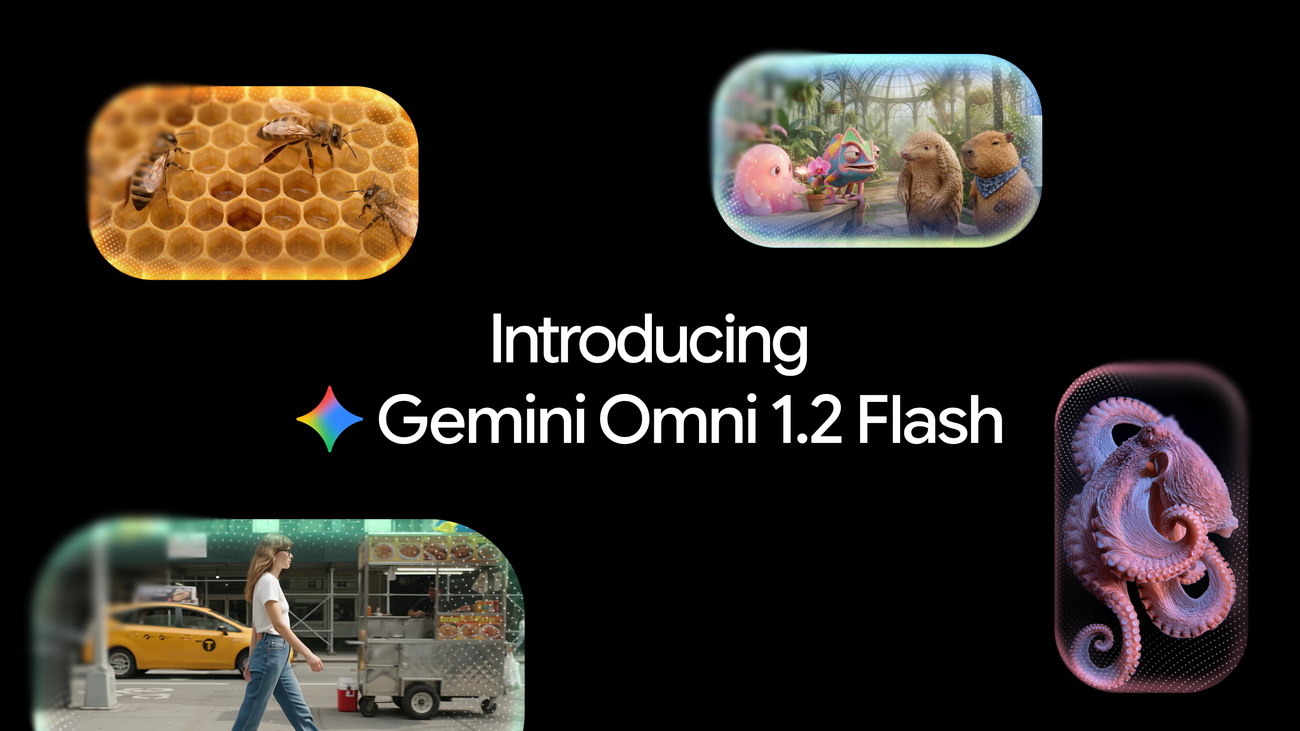
Google released Gemini Omni 1.2 Flash on November 5. You can edit the same generated clip over several turns – swap the background, change the lighting – and ask for fixes in follow-up messages. Clips run from 3 to 15 seconds in one-second steps, up from 10 seconds in Omni 1.1, and 720p costs $0.07 per second, 30% less than Omni 1.1. Finished clips can be upscaled to 1080p or 4K. The model is generally available in the Gemini API and on Google Cloud, and Google is adding it to Gemini for business, Google Vids, Flow, Google Ads and the Gemini app for Google AI Ultra subscribers.
Why it matters: video starts to work like a design file you revise. For marketing and product teams that means more versions of the same promo or onboarding clip for less money, and more need for a clear visual direction so the versions still look like one brand. That is how we approach AI content production.
Source: Google: Introducing Gemini Omni 1.2 Flash
{{newsletter}}
4. Adobe becomes Disney's official AI innovation partner

At Adobe MAX on November 9, Adobe and The Walt Disney Company announced a multi-year strategic alliance with Adobe as Disney's "Official AI Innovation Partner". Adobe gives Disney early access to Firefly, Firefly Foundry, Premiere and Photoshop, plus engineering and research support. Firefly Foundry builds private models trained on Disney's characters, environments and styles. Walt Disney Imagineering R&D already uses it: a sketch-to-image model turns hand drawings into fully rendered 2D concept art. The release names Walt Disney World Resort, Disneyland Resort, Disney Cruise Line, ESPN Edge and StudioLAB. Financial terms were not disclosed.
Why it matters: Disney is moving from public image models to models trained on its own style, and other large brands may follow. A brand's visual system becomes training data, so the better it is defined – characters, shapes, colours, what is off-brand – the more useful such a model gets. We build those systems in brand identity design, and they are worth writing down before any AI touches them.
Source: Adobe: Adobe and The Walt Disney Company alliance
5. Planet opens an AI chat for searching satellite imagery

On November 5 Planet launched the Planet AI app, a map-based AI chat for its satellite imagery. People can find sites, compare how a place changed over time and add public context to what they see. The app is live at ai.planet.com and free for now; Planet says a Planet Insights account will later give easier access to premium features.
Why it matters: satellite data used to need an analyst who knew the tools. A chat on top of a map opens it to people who only know their question. The hard part is trust: every answer needs to point back to the image and the date it came from, so the user can check it. That is the focus of our space and GEOINT UI/UX design.
Source: Planet: Introducing the Planet AI app
6. Axon invests about $1.2B in Skydio
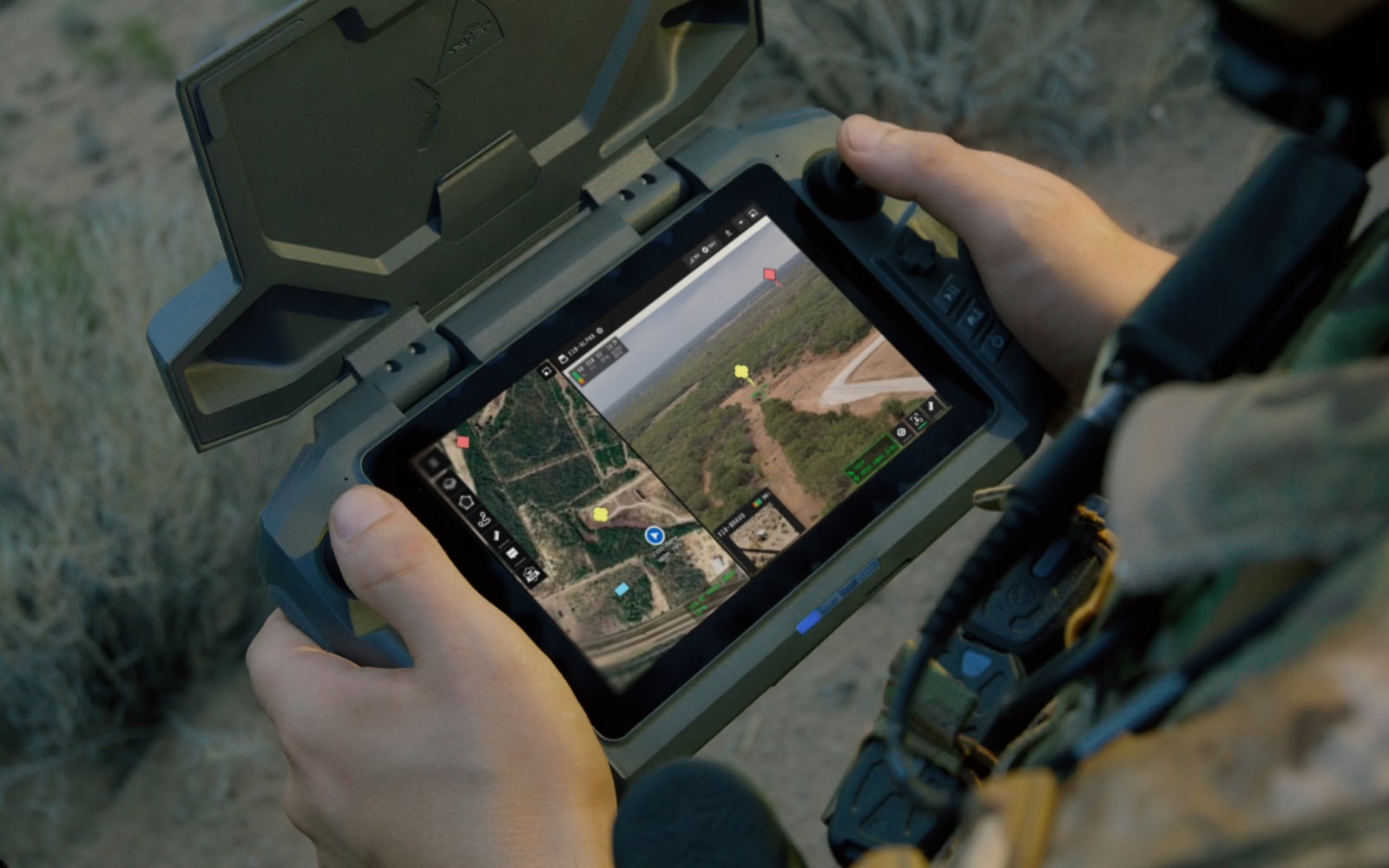
Axon, the maker of police body cameras and Tasers, announced on November 5 that it will invest about $1.2 billion in drone maker Skydio, in cash and Axon stock, subject to final terms. The deal combines new capital with purchases from existing Skydio shareholders and gives Axon about 20% of Skydio on a fully diluted basis, at a $5.2 billion pre-money valuation. Axon becomes Skydio's exclusive distributor for public safety in the US and Canada. Skydio has more than 1,500 public-safety customers. Closing is expected between the fourth quarter of 2026 and the first quarter of 2027.
Why it matters: Axon frames the deal around "drone as first responder", where a drone is sent to an emergency call. Who flies it then – a trained pilot, or a dispatcher who also handles calls, maps and video? The ground control screen has to work for the second person too. That is what we design in drone ground control UI.
Source: Axon: Axon invests $1.2 billion in Skydio; image from Resilience Media
7. Shield AI agrees to buy radar maker Echodyne for $5.3B
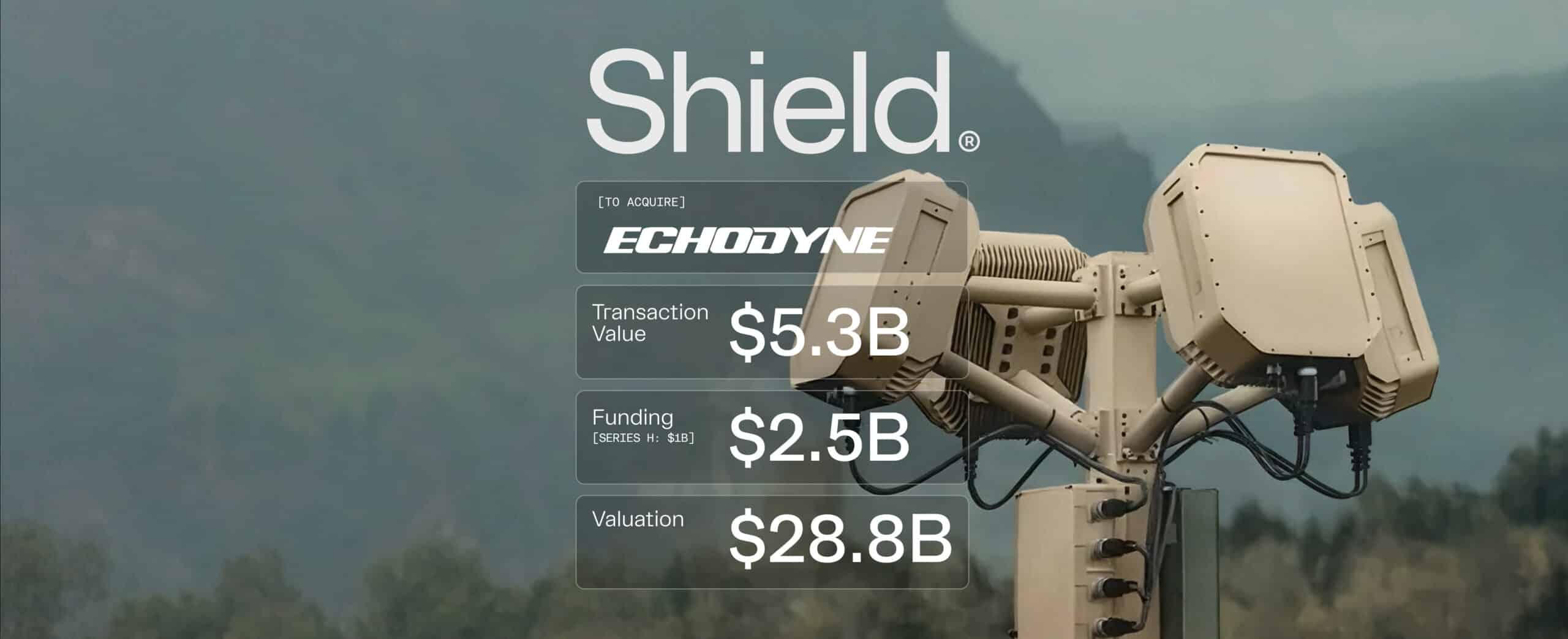
Shield AI announced on November 5 that it will acquire Echodyne, a radar maker from Kirkland, Washington, in a deal valued at $5.3 billion: $4.8 billion at closing plus up to $500 million tied to performance targets. At the same time Shield AI is raising $2.5 billion: a $1 billion Series H at a $28.8 billion post-money valuation, $1 billion of structured equity from Blackstone funds and $500 million of debt led by JPMorgan Chase. The deal is expected to close in early 2027, subject to regulatory approvals.
Why it matters: an autonomy software company is buying the sensor that feeds it. In Shield AI's counter-drone systems the radar track, the autonomy and the operator's screen can come from one vendor, and the question becomes what the operator sees when the system is confident and when it is not. We work on this in counter-UAS UI design.
Illia's take: If you build drones, radars or interceptors, plan for integration from day one. Big players now buy the hardware that feeds their software, and they pick the products that are easy to plug in: an open API, clear documentation and an integration demo your buyer can see before the first call.
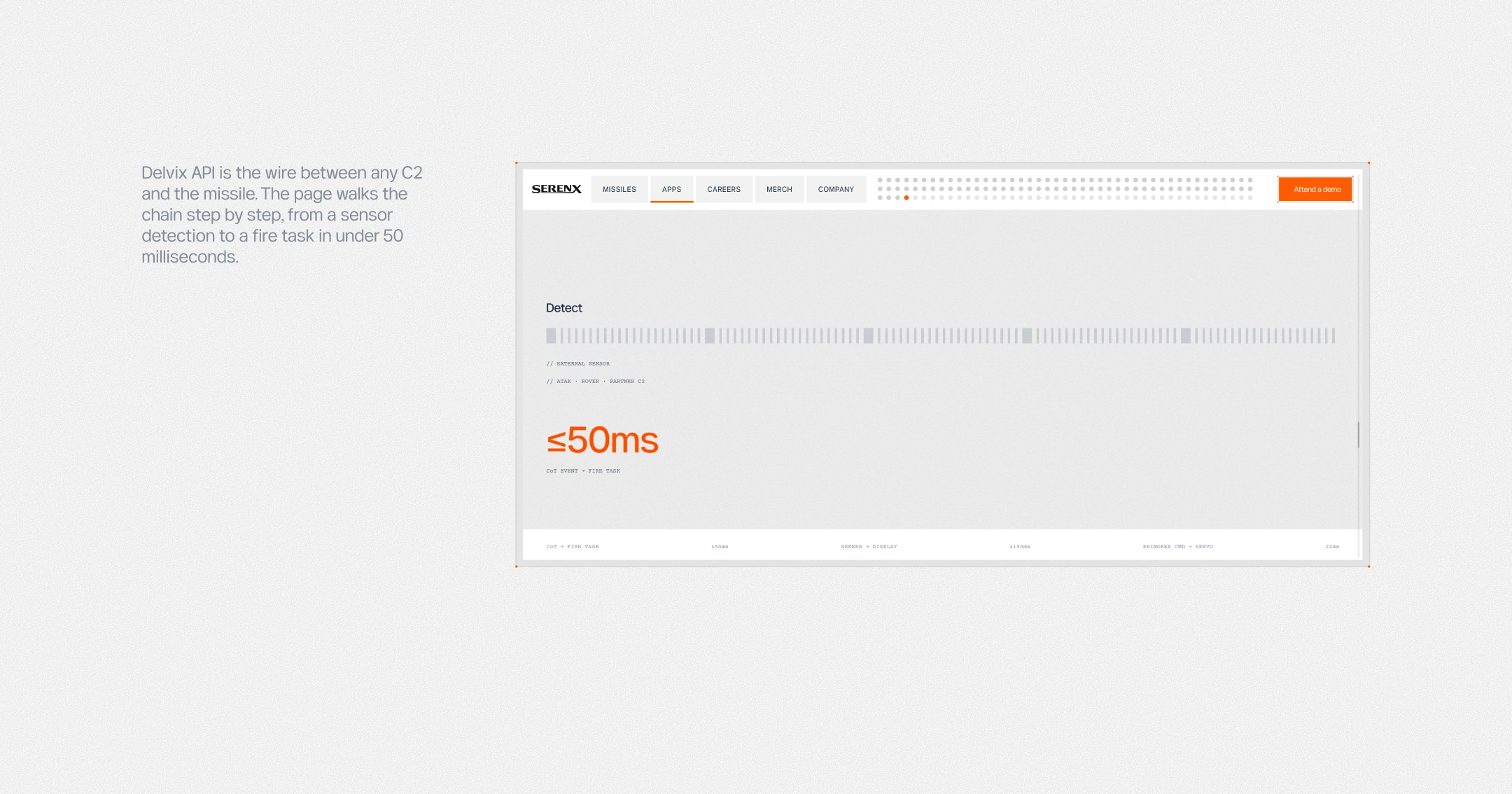
Integration matters for smaller vendors too. SerenX, an interceptor maker, has a separate page for the Delvix API on the website we built, so integration teams can see how the interceptor connects to their C2.
Source: Shield AI: Echodyne acquisition and $2.5B raise
{{case}}
Also this week
- Onodrim Industries raised a $300M Series A at a $1.3B valuation, led by Lux Capital, to take controlling stakes in European aerospace, defense and industrial manufacturers. Onodrim via PR Newswire
- Truck maker Harbinger raised a $240M Series D co-led by Tiger Global, Capricorn's Technology Impact Fund and Ridgeline; defense is one of the areas it will spend on. Harbinger
At Cosmos Studio we design AI products, agent flows and operator consoles for SaaS and defense-tech teams. See our work, and if you are deciding how much your AI should do on its own, let's talk.
{{contact}}
We design AI agents people trust: approvals, task progress, logs, permissions and error recovery. Senior UX/UI and React front-end for agentic products.
FAQ
What is AI & Design Weekly?
A twice-weekly digest by Illia Kulbachnyi and the Cosmos Studio team with the AI and design news that matter to teams building SaaS, AI and defense-tech products.
How do you pick the stories?
We read 30+ design, AI and defense-tech sources and check every claim against the original source. When only a secondary source or a Telegram channel confirms a detail, we say so under the story.
What is an agent harness in UX terms?
It is everything around the AI model that the user feels: what context the agent gets, which tools it can use, when it asks for approval and where it stops. We design these parts in AI agent UX projects; book a call to discuss yours.

Related articles
Start your project with Cosmos™
Drop us a message, Anna reviews every brief personally and gets back to you within one business day. From there it's simple: we align on scope, sign the contract, and book your start date. Fast, clear, no back-and-forth.