JSTAC. Brand identity & website design for space defense
About
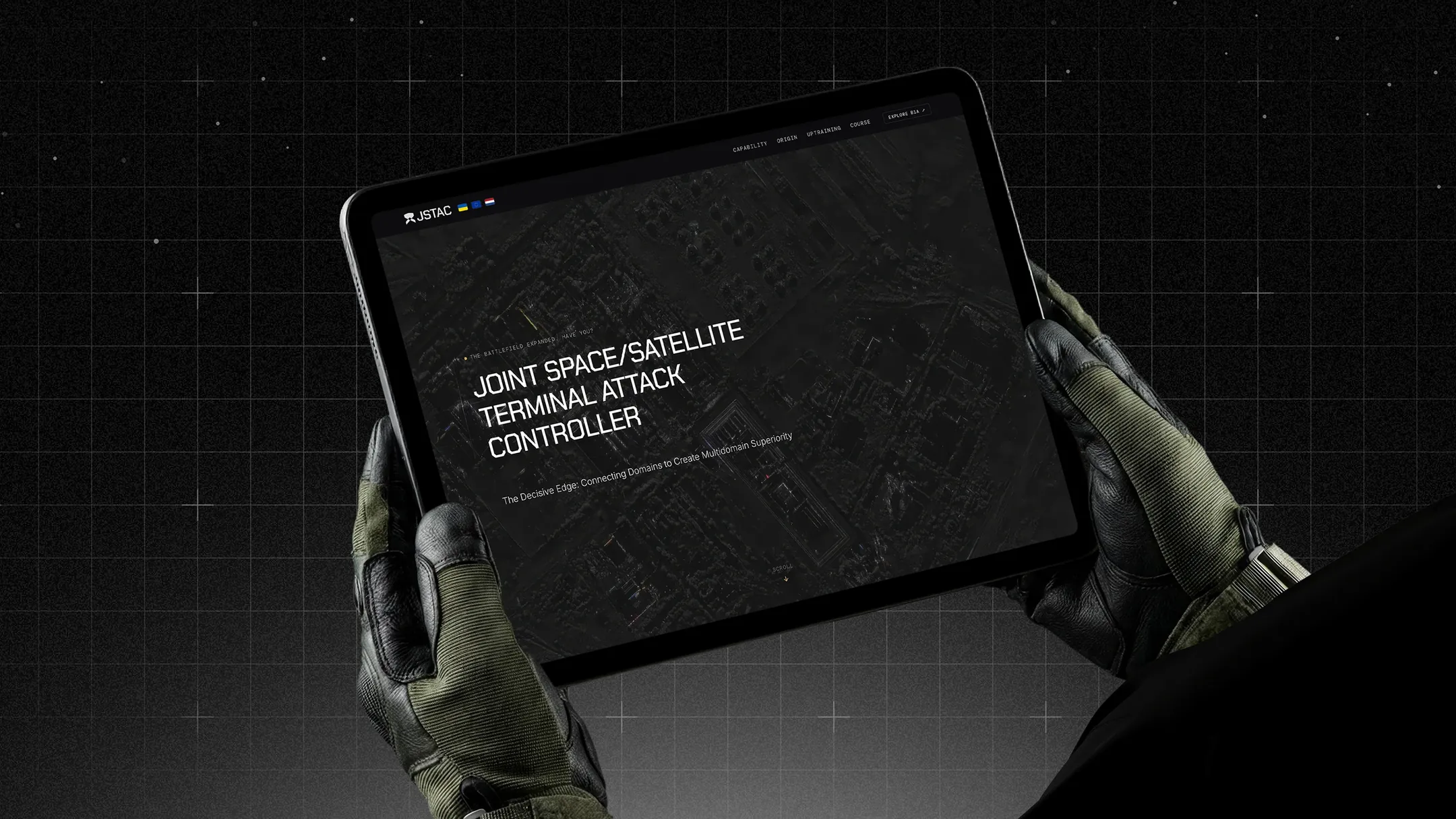
JSTAC stands for Joint Space/Satellite Terminal Attack Controller, a new qualification for experienced Joint Terminal Attack Controllers (JTACs). It takes their work beyond traditional air integration, so they can connect sensors, platforms and effectors across air, space, intelligence and targeting domains. The JSTAC Uptraining Course is a two-week program for JTACs from NATO and partner nations.
Summarize with


Challenge
JSTAC had a strong product but no digital presence to match it. The client needed a brand identity and a website that would present JSTAC to a NATO and defense audience and support the commercial launch of its uptraining program. The site had to explain a new, complex qualification to military readers in plain, structured language.
Military logo and brand identity
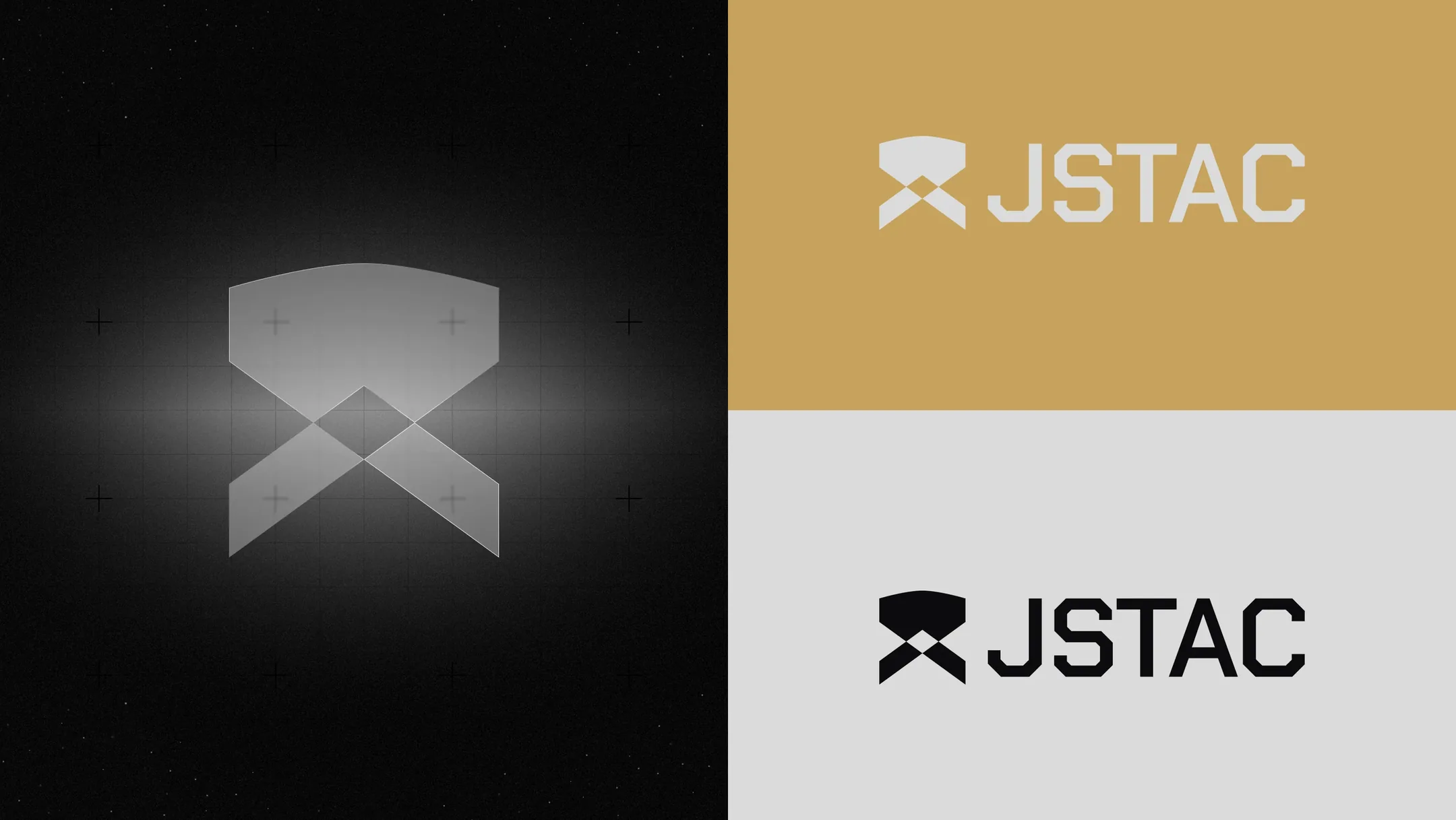
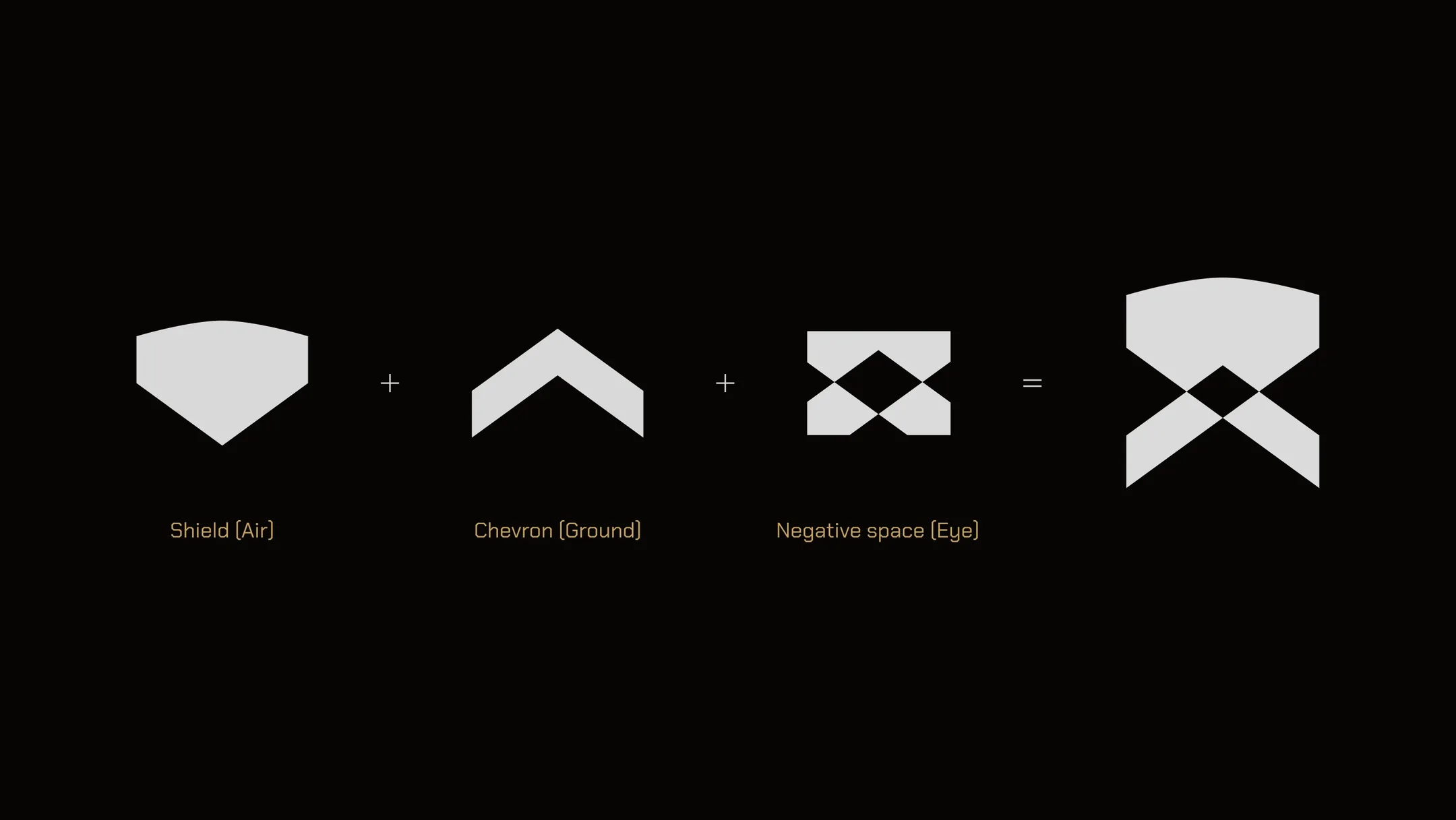
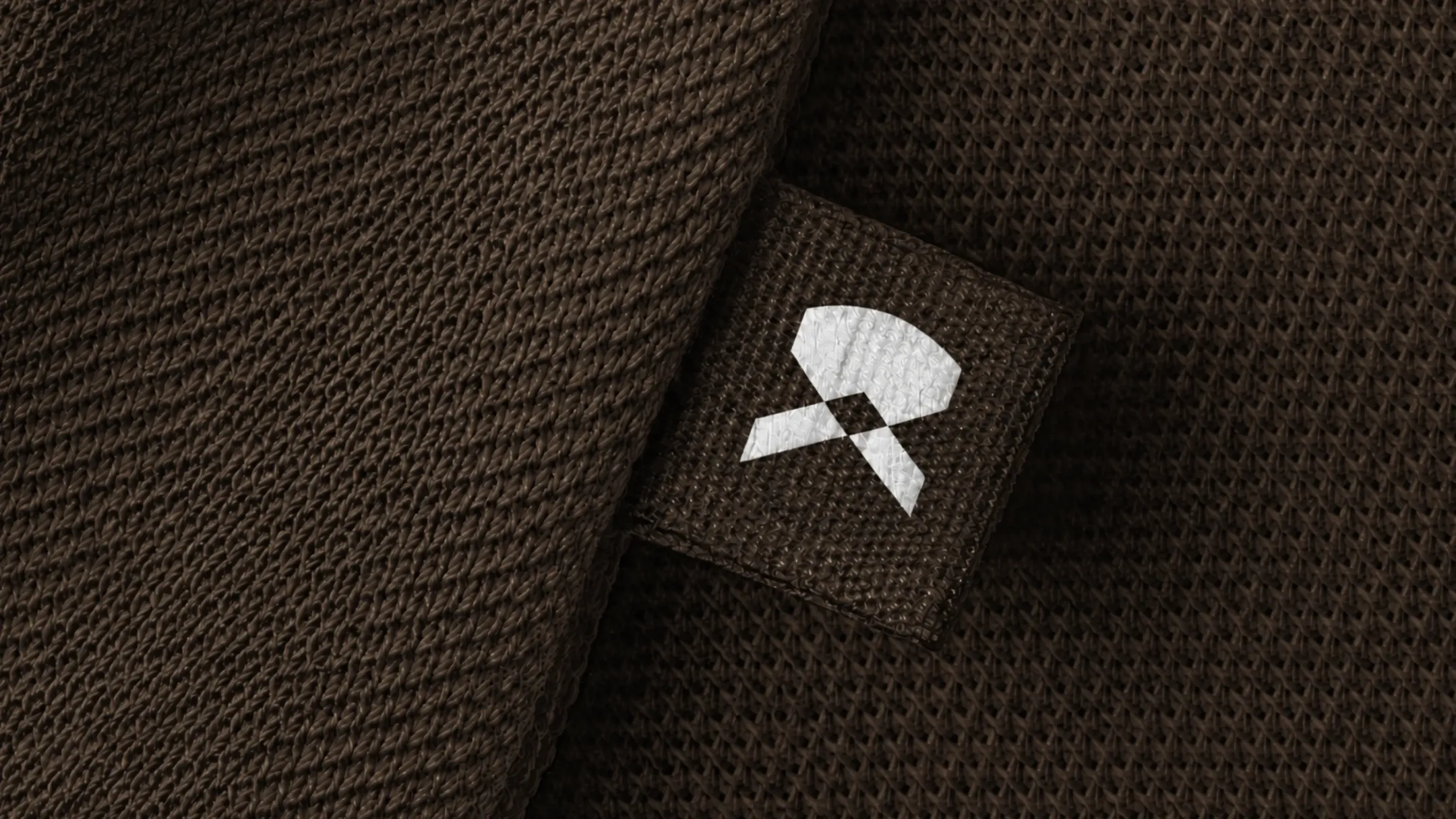
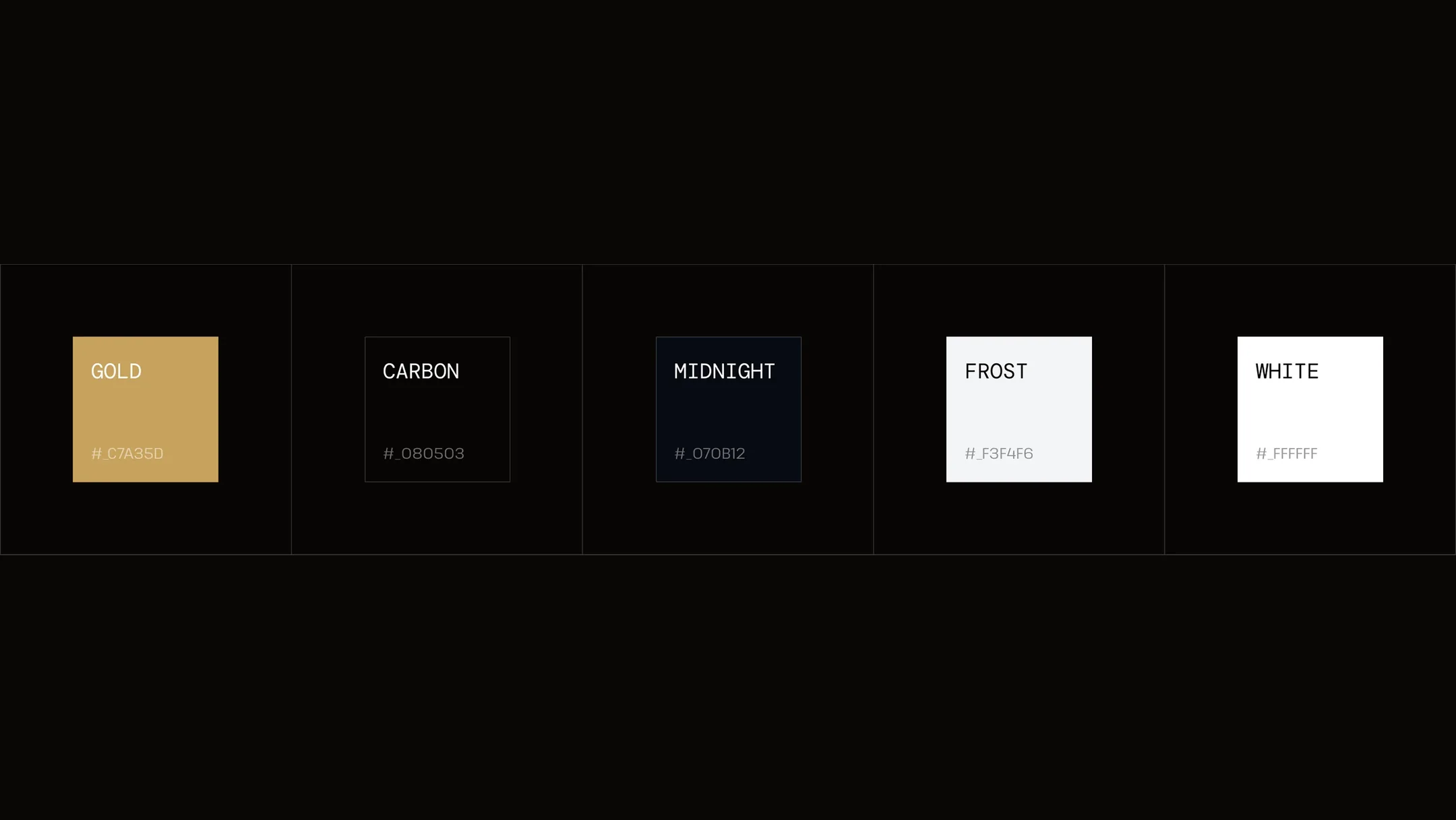
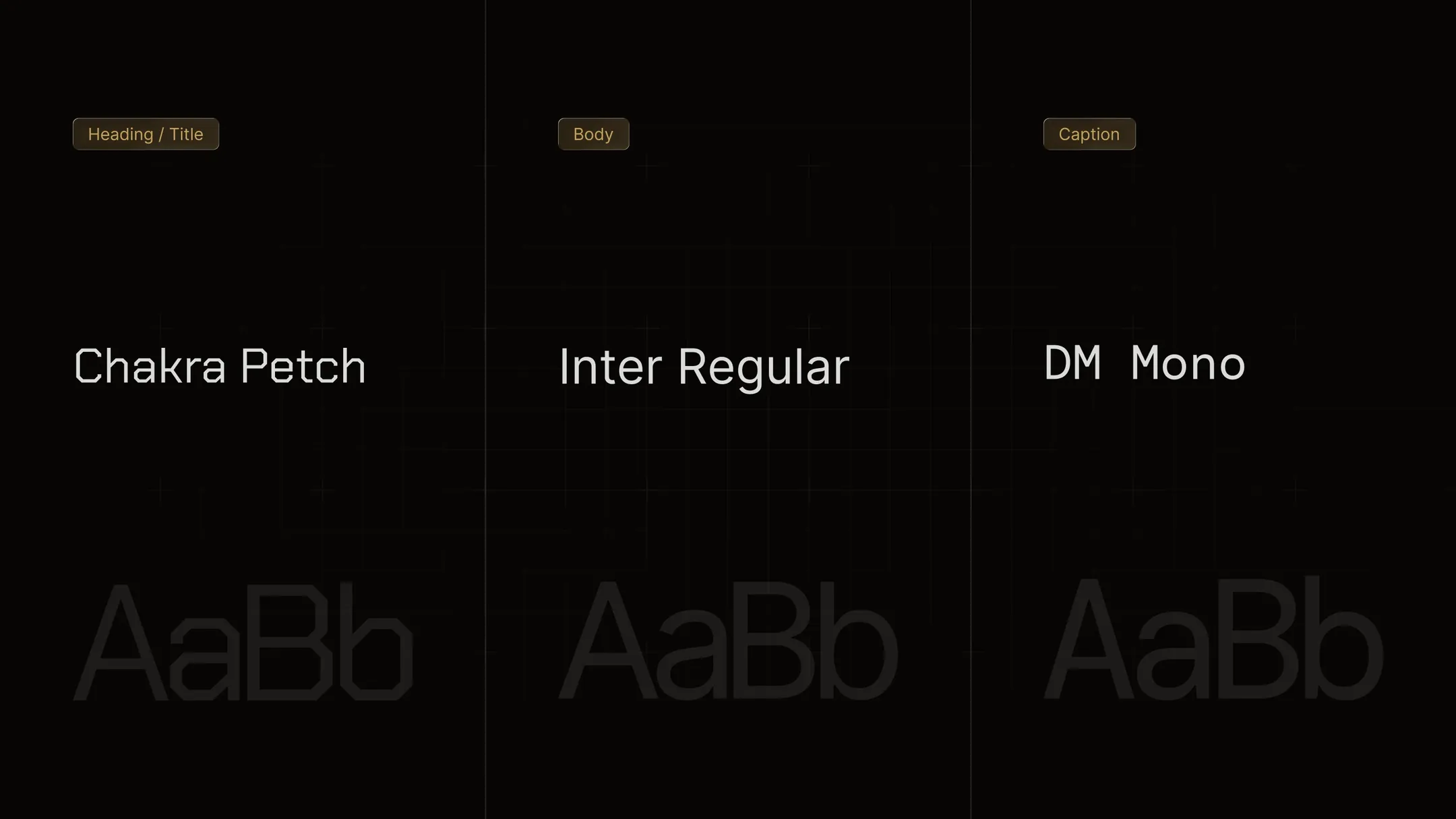
The logo draws on military iconography. It combines three domain symbols into a single mark: a shield for air, a chevron for ground and negative space that forms an eye for space-based observation. The mark also works as an embroidered patch. The palette is built on gold, carbon, midnight, frost and white. Gold accents on dark surfaces reflect the precision of the domain. Chakra Petch sets the headings, Inter the body text and DM Mono the captions and technical labels.
Website design
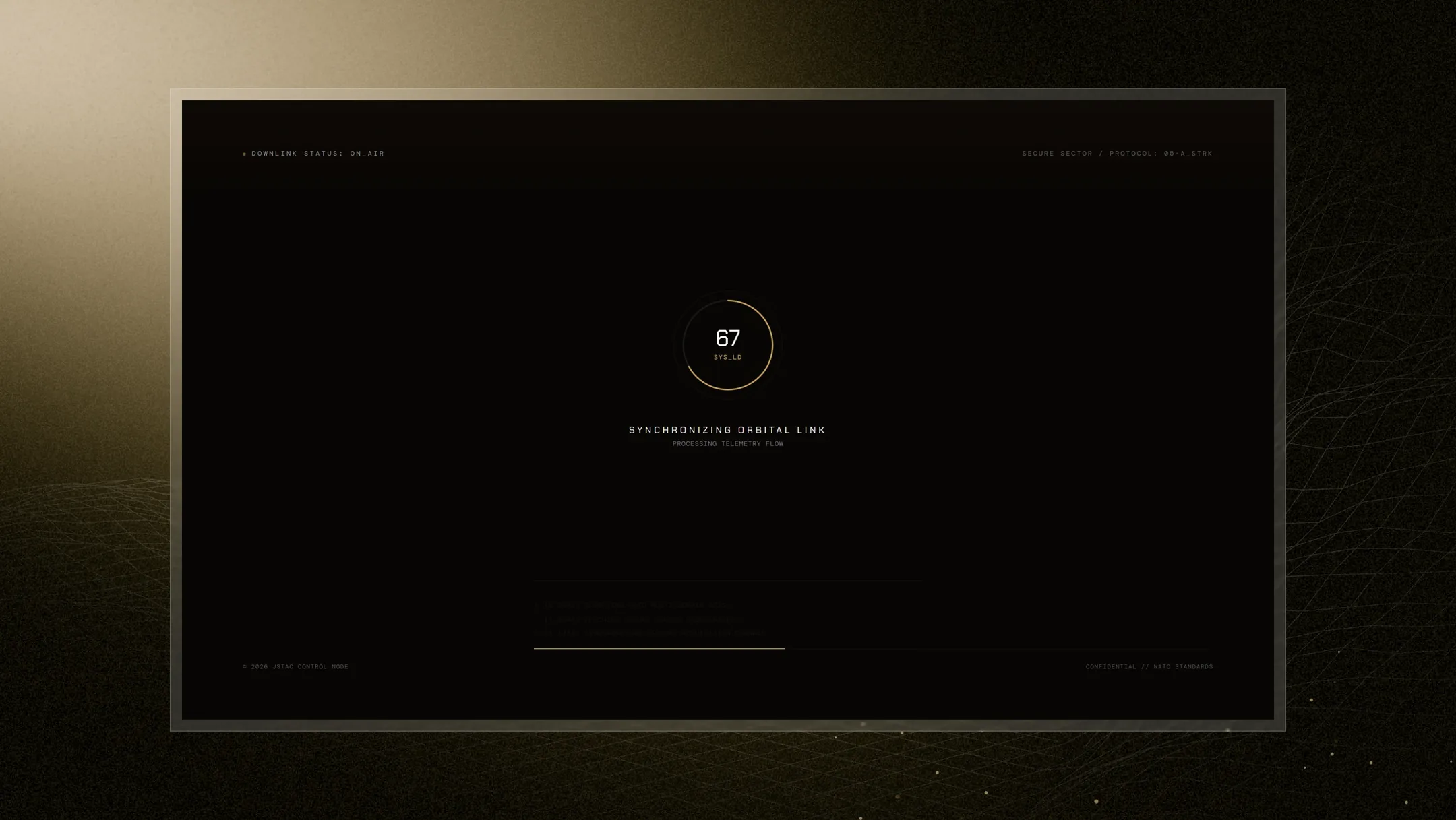
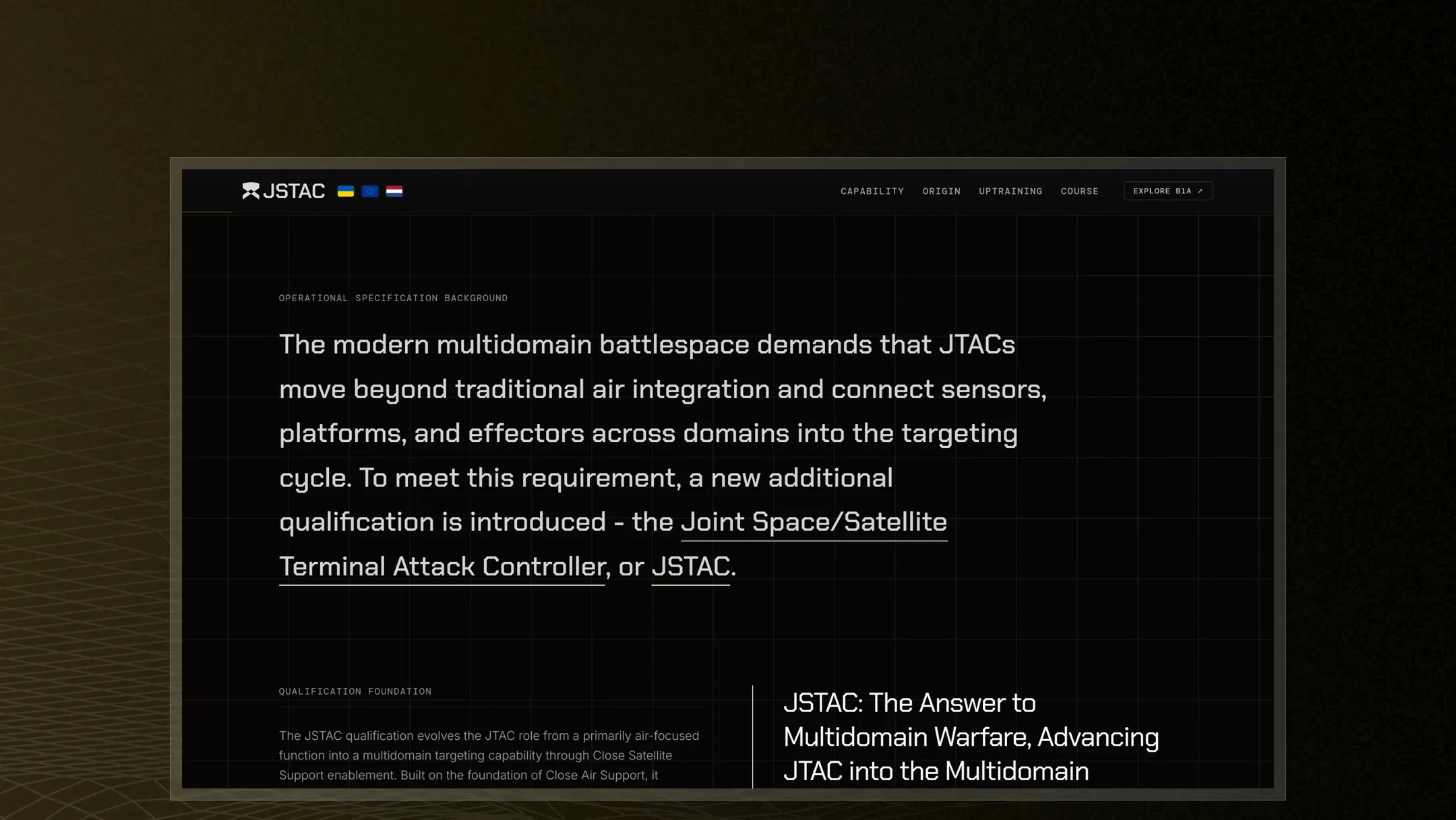
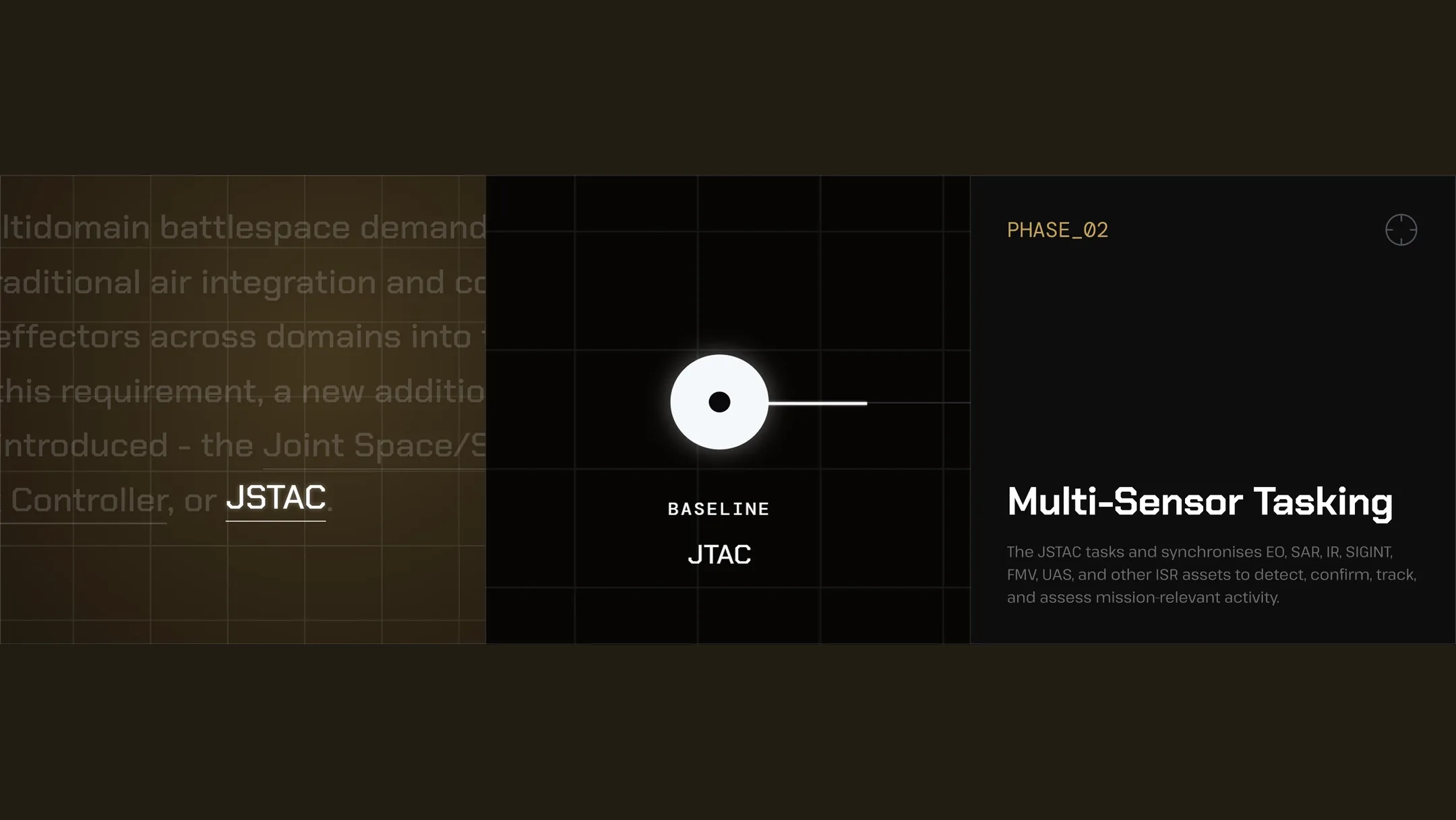
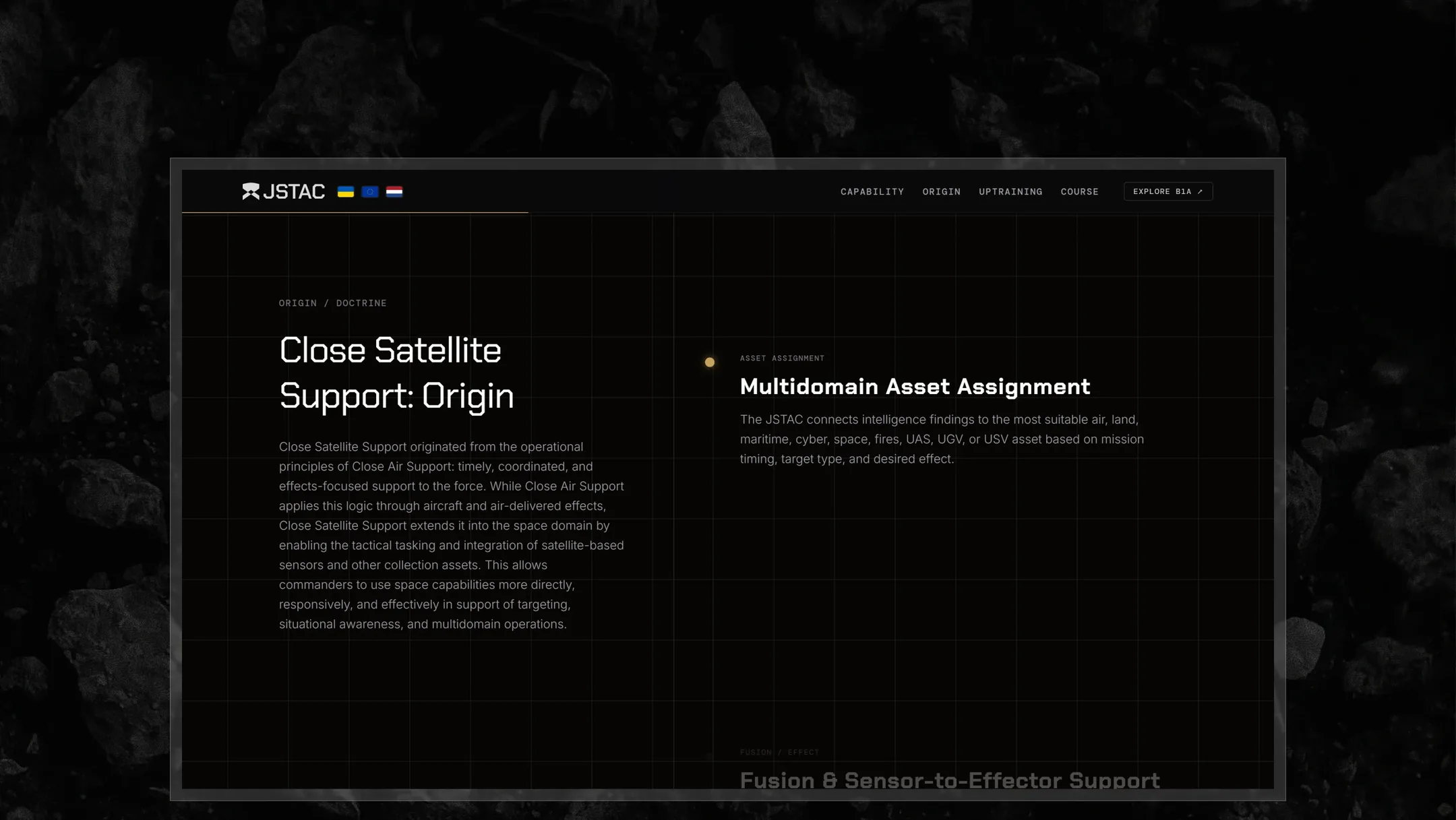
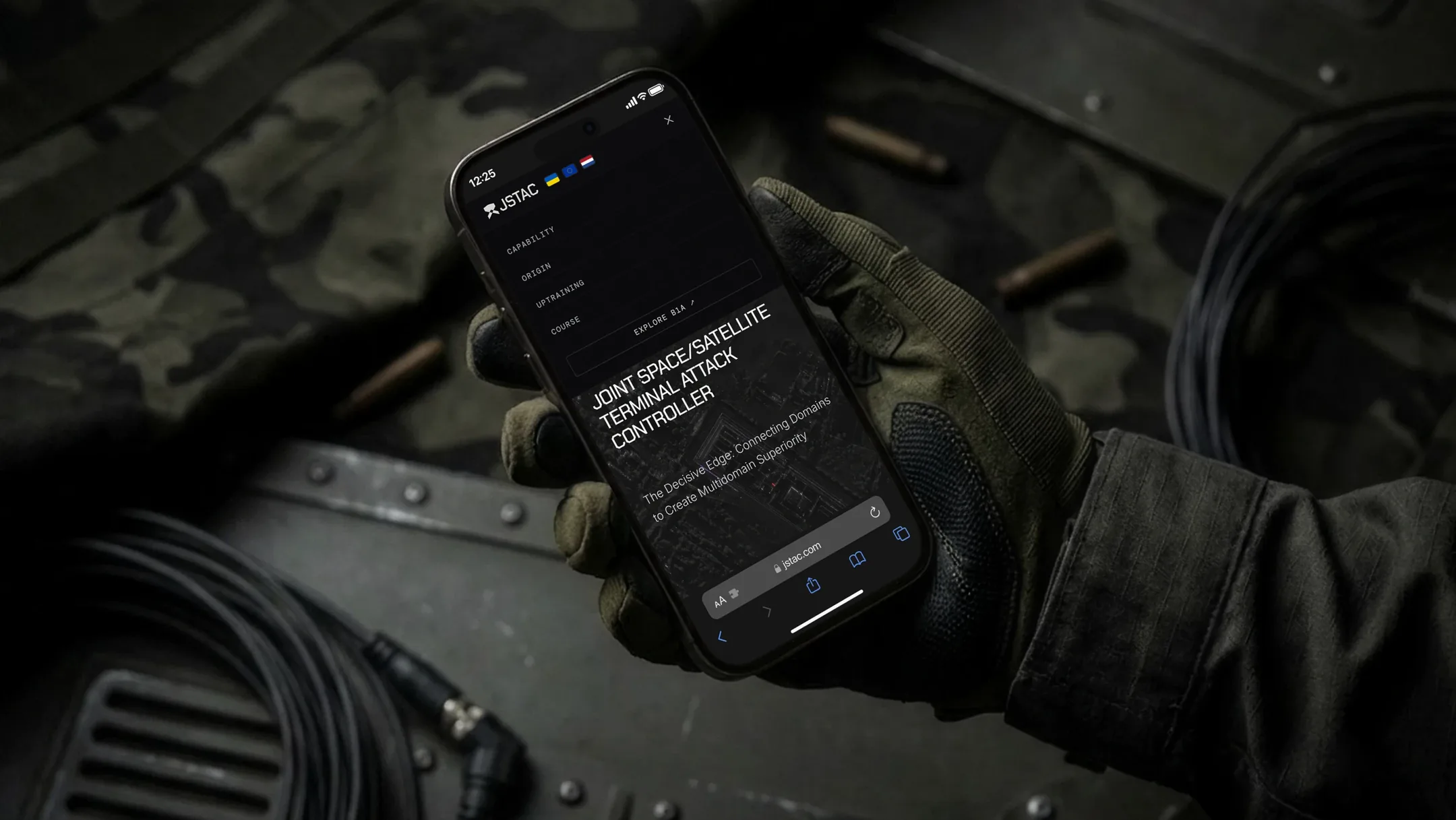
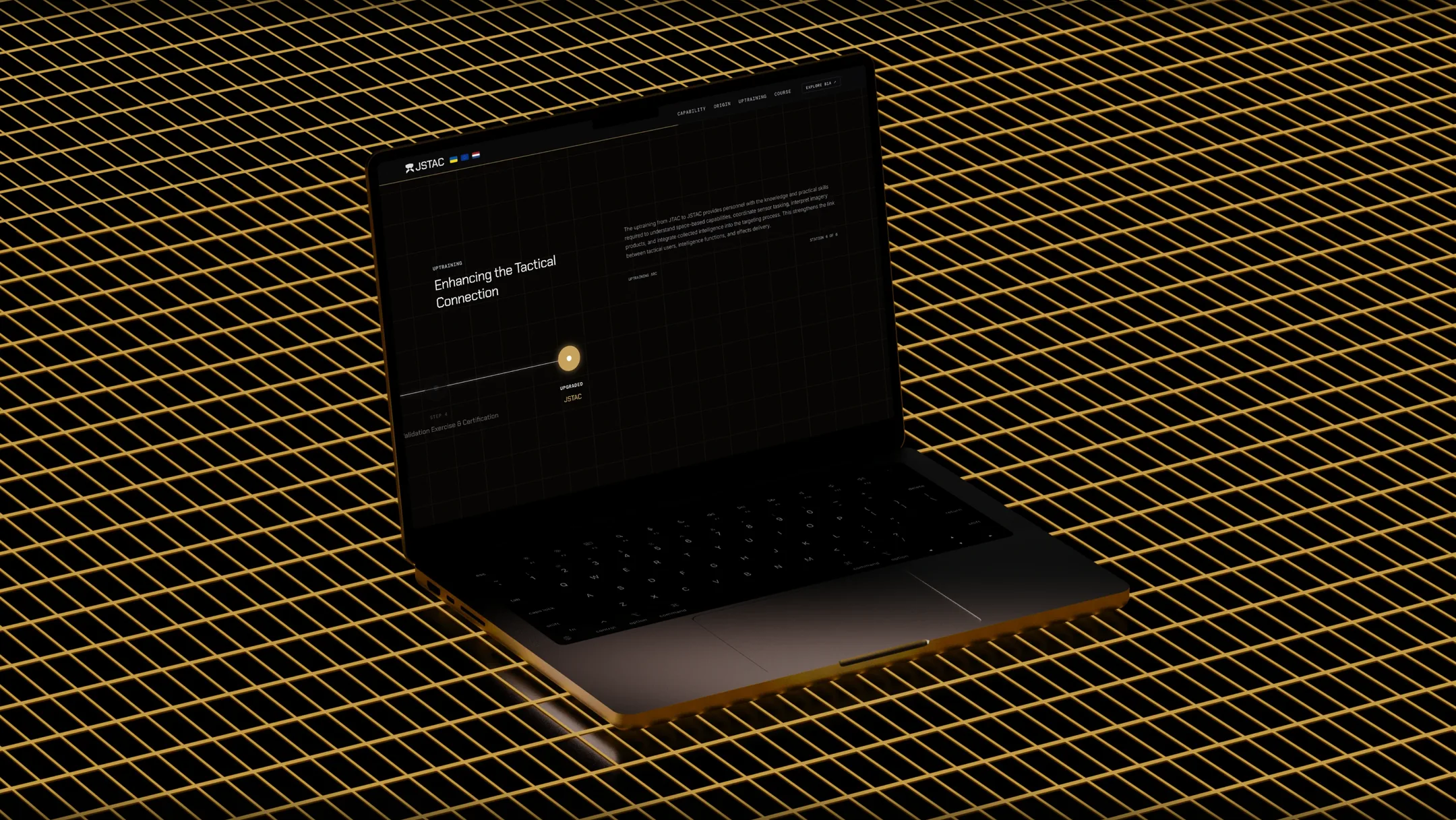
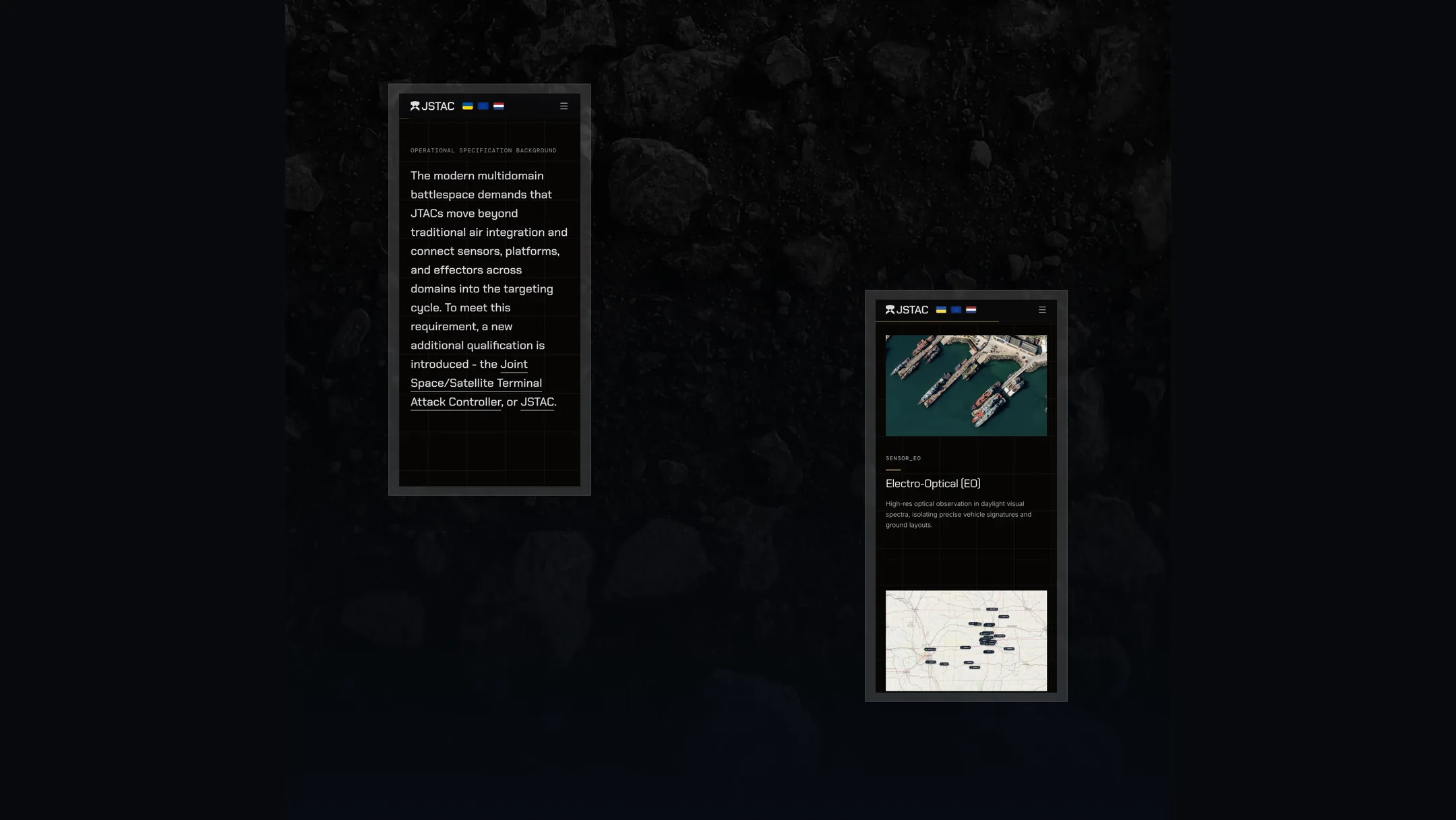
The website uses a dark, tactical interface built for a defense audience. Sharp typography, a structured layout and gold accents carry the brand into the website. A loader that synchronizes an orbital link opens the experience, and the navigation leads through four sections: Capability, Origin, Uptraining and Course. The home page explains why the qualification exists: the modern multidomain battlespace demands that JTACs move beyond traditional air integration and bring sensors, platforms and effectors from every domain into the targeting cycle.
Capability model and course
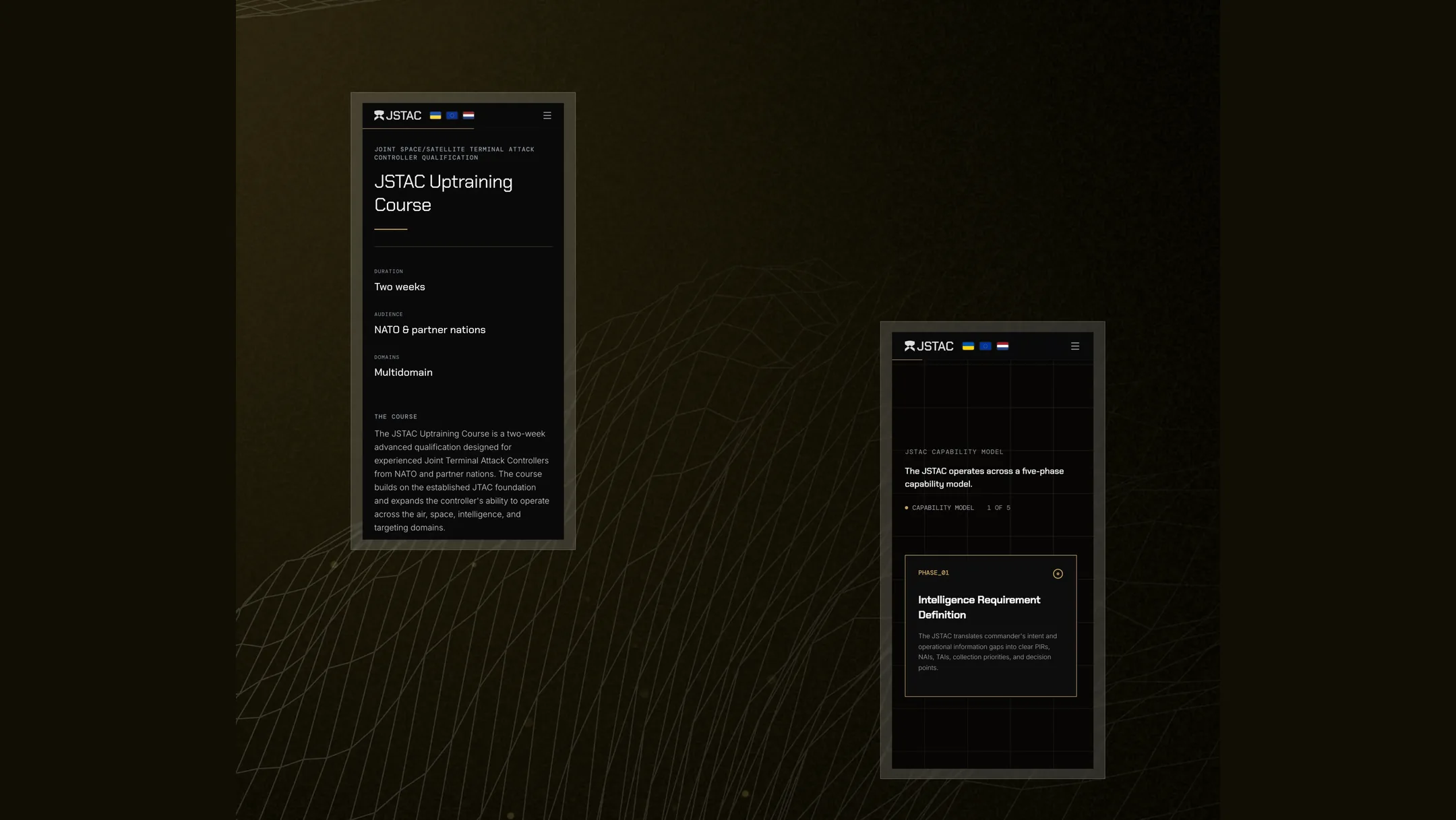
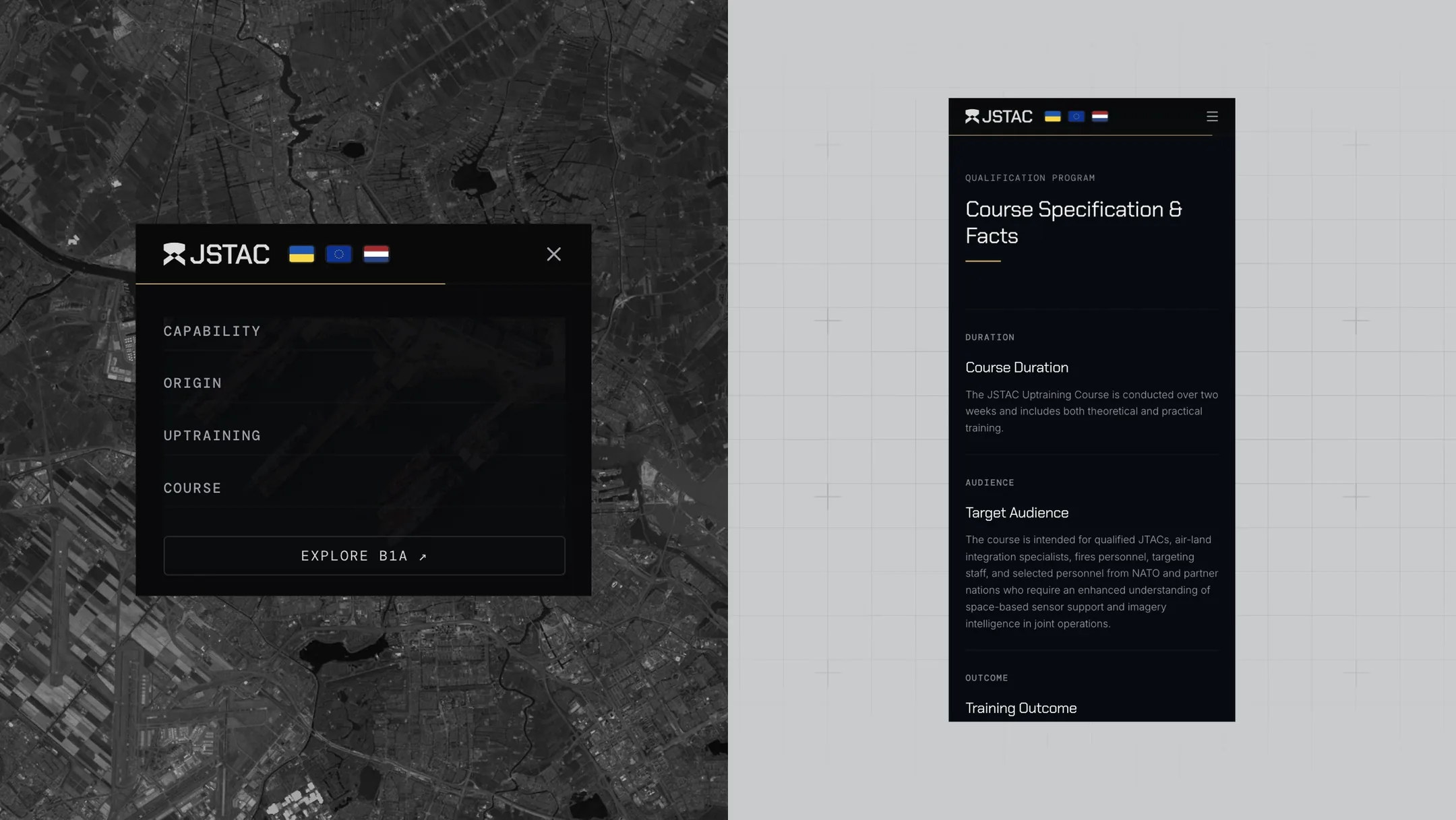
The JSTAC operates across a five-phase capability model, from Intelligence Requirement Definition to Multi-Sensor Tasking and beyond. On the site, it is presented as numbered phase cards. The course page works like a specification sheet: duration, audience, domains and a short description of what the training adds to the JTAC foundation. A map-based menu keeps every section one tap away.
Sensors and mission content
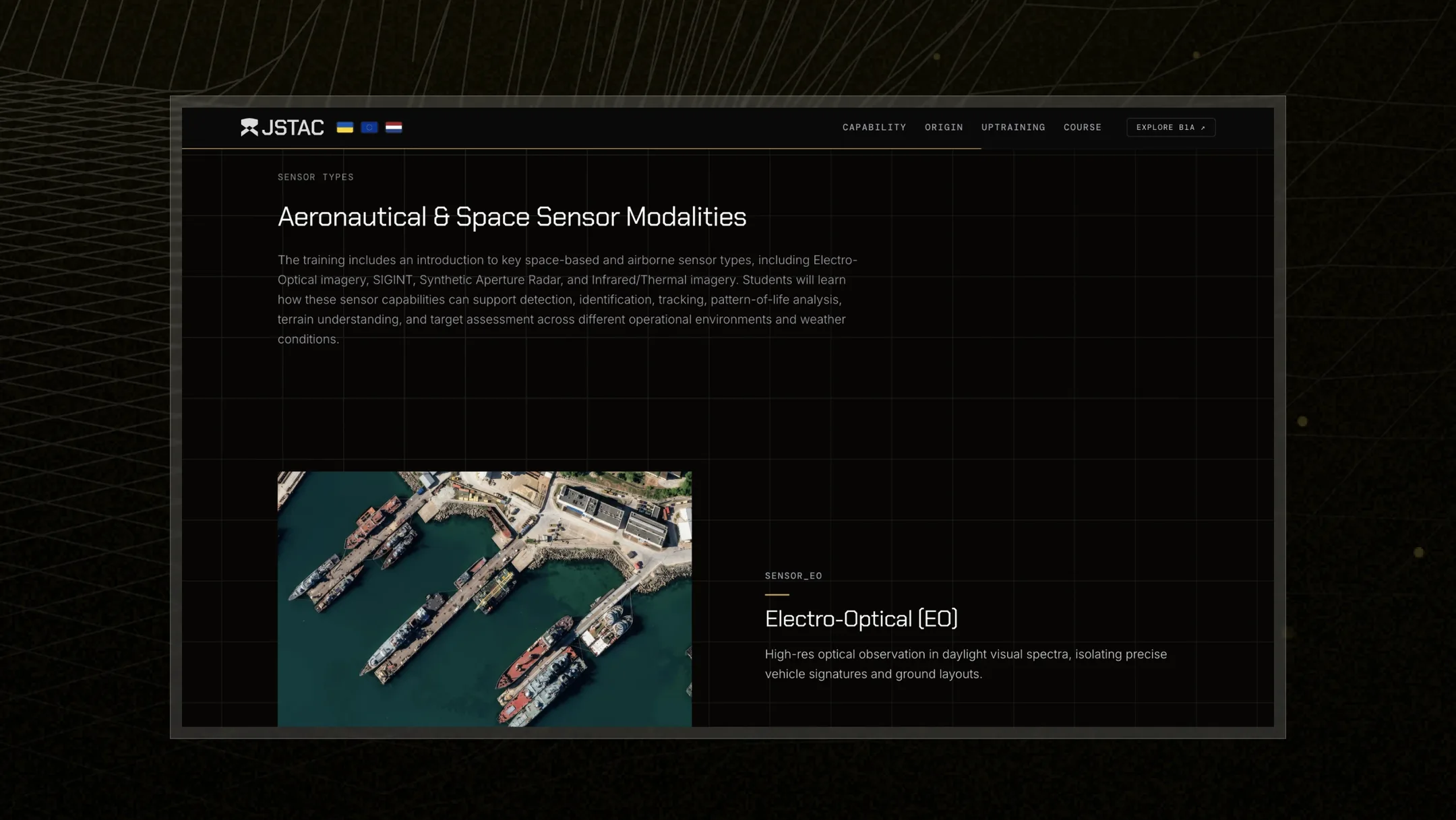
Space support only makes sense when the reader sees what each sensor adds. Sections on aeronautical and space sensor modalities, such as electro-optical imagery, pair short technical explanations with satellite images. Pages on Close Satellite Support, multidomain asset assignment and sensor-to-effector support follow the same grid, so complex topics stay easy to scan.
Responsive design
The site is designed for desktop and mobile. The mobile layouts keep the desktop hierarchy: clear section labels and short paragraphs.
Frequently asked questions
How do you design a brand identity for a defense or space company?
Cosmos Studio starts from the mission and the audience: military readers, procurement teams and partners. For JSTAC, that meant a logo built from military iconography (air, ground and space symbols in one mark), a dark palette with gold accents and technical typefaces. Then we carry the same system into the website, documents and presentations. See our defense startup branding and brand identity design services.
How much does defense branding and website design cost?
Projects start at $5,000, with hourly rates from $50. A brand identity usually takes 1–3 weeks, and a multi-page website 2–4 weeks for design. The final budget depends on the scope of the identity and the number of pages and is set after a discovery call. Details are on our defense tech website design page.
Can you work under NDA on defense and military projects?
Yes. Cosmos Studio signs an NDA from the first call and shows unreleased work only in private previews until you approve the launch.
Do you also design interfaces for space and GEOINT products?
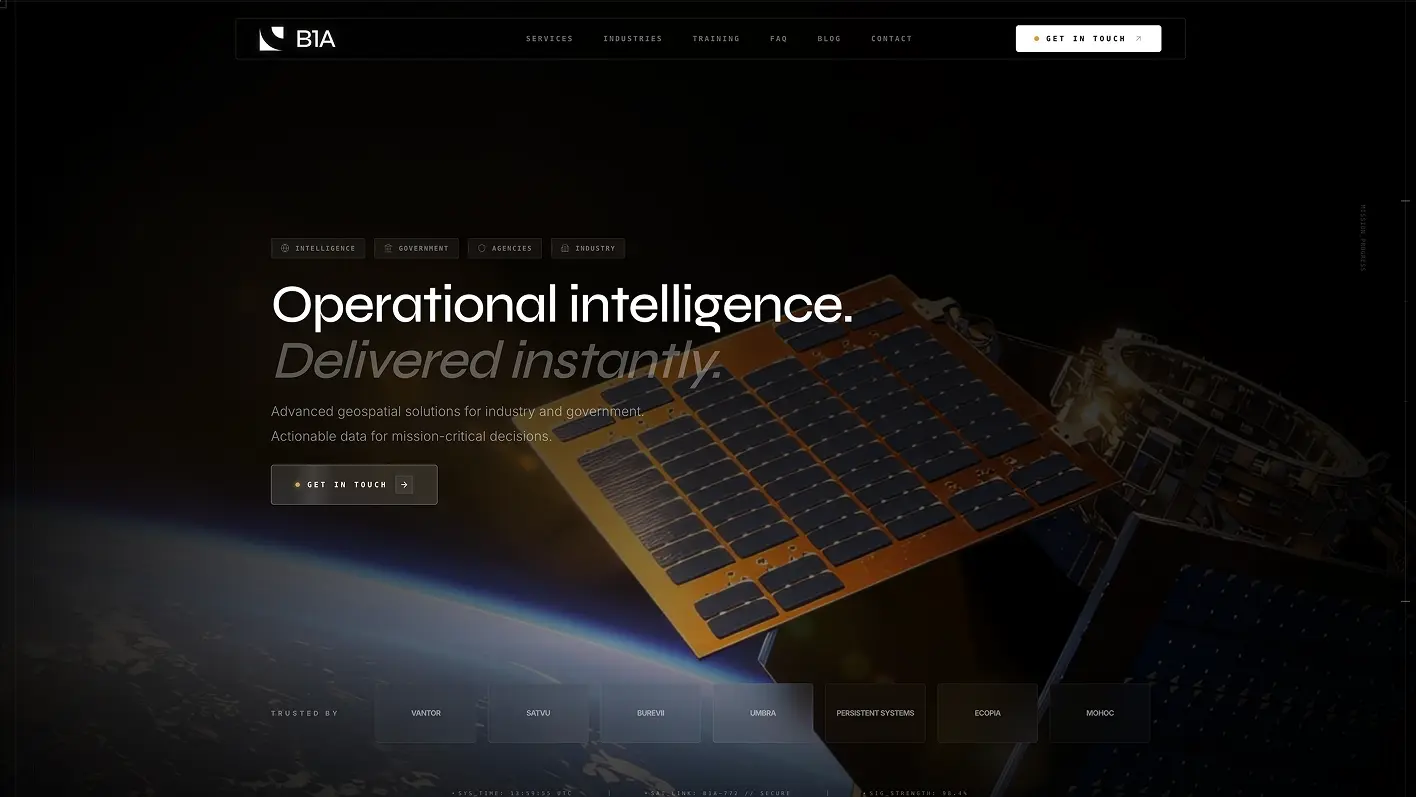
Yes. Besides brands and websites, we design imagery analysis platforms, geospatial dashboards and C2 interfaces. For Bravo1Alpha, a GEOINT and IMINT provider, we created the brand identity and defense websites and designed a browser-based analysis platform for intelligence analysts. See space and GEOINT UI/UX design and our military and defense UI/UX design page.





































Start your project with Cosmos Studio™
Drop us a message, Anna reviews every brief personally and gets back to you within one business day. From there it's simple: we align on scope, sign the contract, and book your start date. Fast, clear, no back-and-forth.
